
Lot Code Labels for FSMA 204: What to Print, What to Print It On, and How to Keep It Readable
Posted by Thermal Printer Supplies on Nov 2nd 2026
Food Labels · FSMA 204 | By Thermal Printer Supplies
Last reviewed November 3, 2026
In This Post
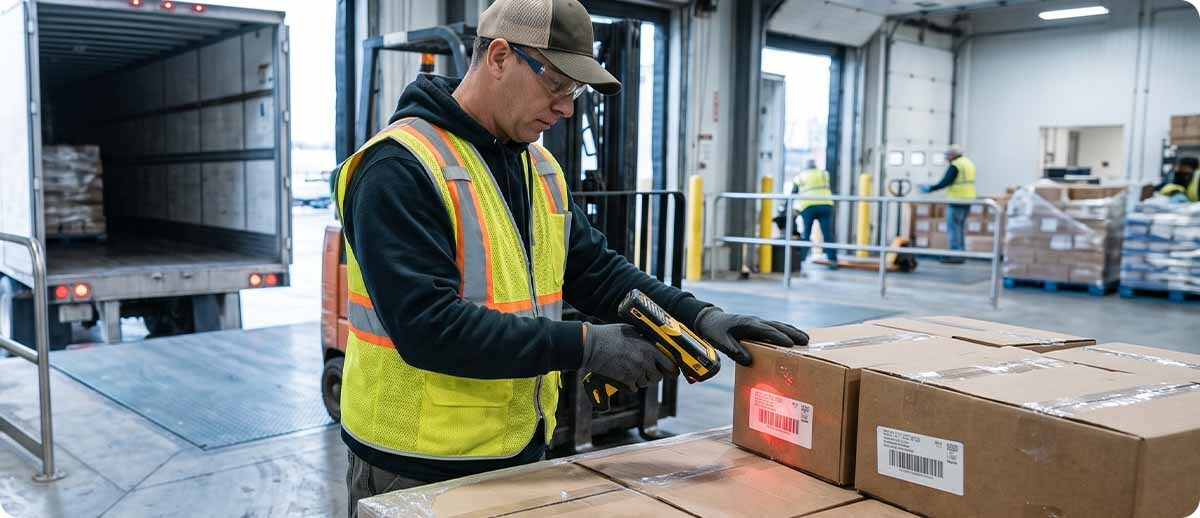
FSMA 204 runs on lot codes, and for most food companies the lot code lives on a case label. That label has to survive a cooler, a freezer, a sweaty truck, and a busy receiving dock, then still scan on the first try. Here's what to print on a lot code label, what to print it on, and how to keep it readable from packing to receiving.
Lot Code Label Quick Facts
- What it carries: the product, the lot code, and the key dates, in a barcode and in text people can read.
- Barcode to use: GS1-128 is the standard for cases. The lot code goes in Application Identifier (10).
- Refrigerated or frozen: use synthetic labels, a cold-temperature adhesive, and a thermal transfer ribbon.
- Dry, short trips: direct thermal paper labels can work if the product moves within weeks.
- FSMA 204 timing: FDA can't enforce the rule before July 20, 2028, but many buyers want lot data now.
A lot of FSMA 204 planning focuses on software and scanners, and both matter. But the most common failure point in a traceability system is a lot simpler: a label that smeared, curled off a frosty box, or printed too faint to scan. If the receiving dock can't read your lot code, the data never makes it into anyone's system.
The good news is that getting the label right is mostly a matter of matching four things to where your product goes: the label size, the material, the adhesive, and the way it's printed.
Start Here
What a Lot Code Label Has to Do
What Is a Lot Code?
A lot code is a number or set of characters that identifies a group of products made, packed, or processed together under the same conditions. If there's ever a problem, the lot code tells you exactly which cases are affected and where they went, so you can pull those cases instead of everything on the shelf. You'll also see it called a batch number or lot number.
What Is a Traceability Lot Code Under FSMA 204?
Under FSMA 204, the traceability lot code (TLC) is the lot code you assign when a food on FDA's Food Traceability List is first packed, is transformed (cut, mixed, cooked, or repacked), or is received from a fishing vessel. That code has to follow the product through every shipment and receipt after that. FDA's Food Traceability Rule page has the full requirements.
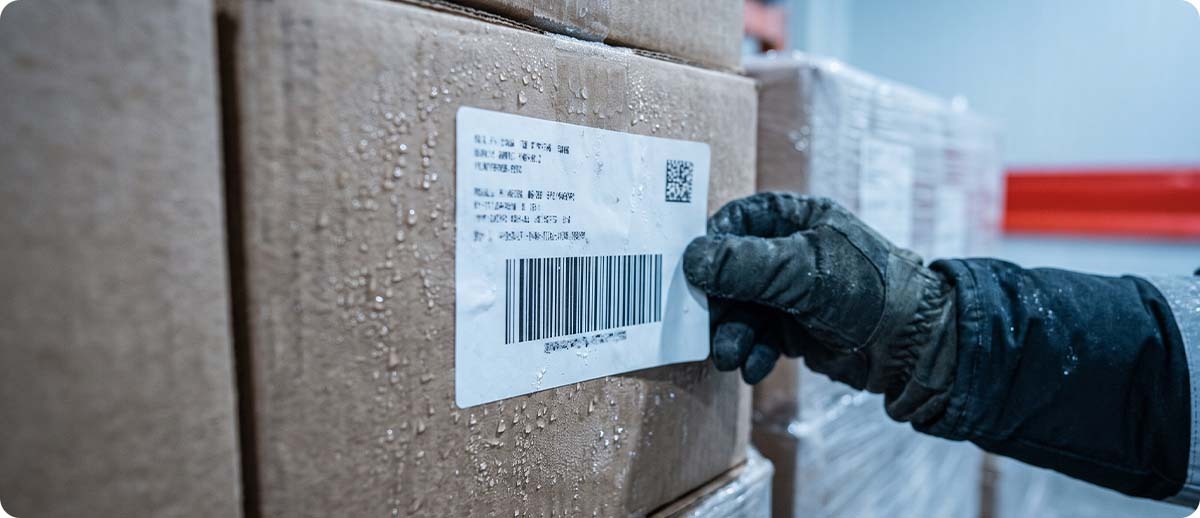
Here's a detail that surprises people: the rule doesn't say the TLC must be printed on the case. It says the TLC and related data have to travel with each shipment, on paper or electronically. In practice, a scannable label on the case is the simplest and most reliable way to make that happen, and it's what most buyers expect.
If the lot code is on the case and it scans, receiving gets the data in seconds. If it isn't, someone is typing it in by hand.
What to Print
What Goes on an FSMA 204 Case Label
What Should Go on a Lot Code Label?
Most food companies already print a case label. For FSMA 204, the goal is to make sure the right fields are on it, both in the barcode and as human-readable text. GS1 uses numbered Application Identifiers (AIs) to tell scanners what each piece of data is:
| Field | GS1 Application Identifier | Why It Matters |
|---|---|---|
| Product (GTIN) | (01) | Identifies exactly what's in the case |
| Lot or batch number | (10) | Carries your traceability lot code |
| Pack date | (13) | When the product was packed; common on produce and eggs |
| Production date | (11) | When the product was made; common on processed foods |
| Use-by or best-before date | (17) or (15) | Expiration or quality date for rotation |
| Net weight | (3103) for kilograms, (3203) for pounds | Needed for variable-weight cases like cheese and meat |
| Plain-text details | None | Product name, lot code, and dates printed in large text so people can read them without a scanner |
On a phone, swipe the table sideways to see every column.
GS1 US recommends combining the GTIN and the lot number as your traceability lot code, which keeps every TLC unique across products. Its FSMA 204 resources walk through how that works.
Which Barcode Should Carry the Lot Code?
For cases, use a GS1-128 barcode. It's the long linear barcode most distribution centers and grocery receiving docks already scan, and it can carry the GTIN, lot, and dates in one symbol. Pallets usually get a separate 4 x 6 inch logistics label with an SSCC, the pallet's serial number, in AI (00).
You'll hear a lot about 2D barcodes because of GS1's Sunrise 2027 push. That effort is mainly about consumer packaging scanned at retail checkout. A 2D code like GS1 DataMatrix can carry the same lot data on a case, but only add one if your buyers can scan it. Today, GS1-128 is still what most receiving docks expect.
What to Print On
Choosing the Right Label Stock
What Size Should a Lot Code Label Be?
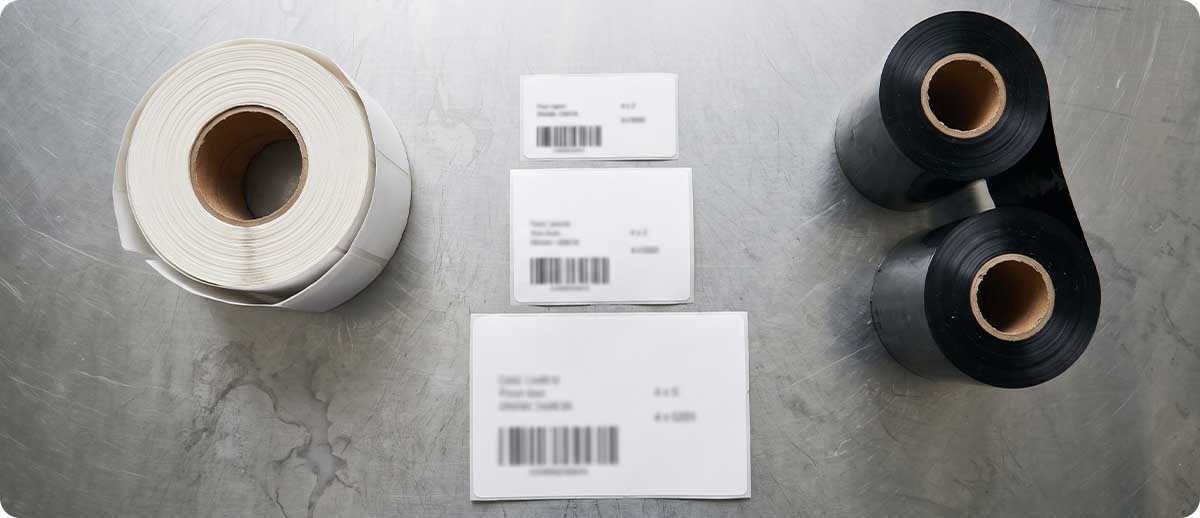
Size the label to the barcode, not the other way around. GS1 calls for GS1-128 bars on logistics labels to be at least 1.25 inches tall, and the symbol gets wider with every field you add. A barcode carrying a GTIN, lot, and two dates usually needs a label at least 4 inches wide.
Cases
4 x 2 or 4 x 3 in
Fits a GS1-128 with GTIN, lot, and a date or two, plus human-readable text. The most common case label sizes.
Cases with more data
4 x 4 in
Room for net weight, a longer product name, and ingredient or allergen text alongside the barcode.
Pallets
4 x 6 in
The standard size for pallet labels with an SSCC barcode and ship-to details.
Direct Thermal or Thermal Transfer for Lot Code Labels?
Direct thermal labels darken with heat, so they need no ribbon and cost less to run. They also fade with heat, sunlight, and time, and they scuff easily, which can turn a crisp barcode into a gray smear in a few weeks of rough handling. Thermal transfer prints with a ribbon onto the label, so the image lasts for years and stands up to moisture and abrasion. Our direct thermal vs. thermal transfer cost comparison breaks down what each one costs over time.
For lot code labels, the rule of thumb is simple. If the product is dry, ships within a few weeks, and stays out of the sun, direct thermal can work. If it goes into a cooler, freezer, or washdown area, or sits in storage for months, use thermal transfer.
Which Label Material Holds Up in the Cold Chain?
Here's how to match the label to where your cases actually live:
| Environment | Label Material | Adhesive | Print Method and Ribbon |
|---|---|---|---|
| Dry warehouse, quick turns | Paper | Standard permanent | Direct thermal, or thermal transfer with a wax ribbon |
| Refrigerated, 33 to 40°F | Synthetic (polypropylene) or coated paper | All-temperature | Thermal transfer with a wax-resin ribbon |
| Frozen, 0°F and below | Synthetic (polypropylene) | Freezer-grade | Thermal transfer with a wax-resin or resin ribbon |
| Washdown or wet areas | Polypropylene or polyester | All-temperature or freezer-grade | Thermal transfer with a resin ribbon |
| Long storage or heat exposure | Synthetic | Permanent rated for the temperature | Thermal transfer; avoid direct thermal |
On a phone, swipe the table sideways to see every column.
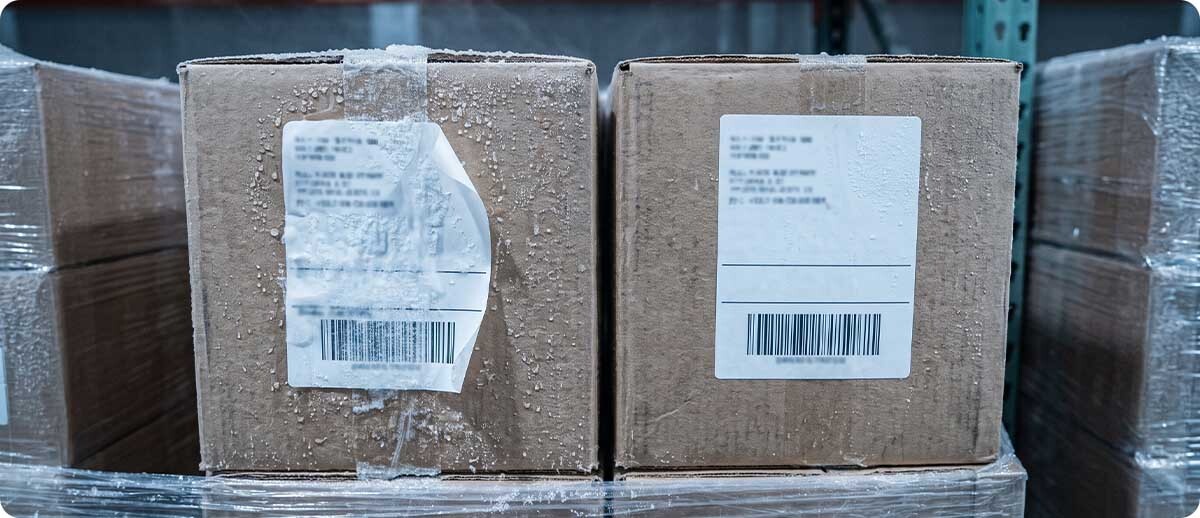
Two details make or break cold chain labels. First, check the minimum application temperature, not just the service temperature. Standard and all-temperature adhesives often need to go on above about 20°F, even when they're rated to hold far colder, so label the case before it goes into the blast freezer. If you have to label cases that are already cold, choose a freezer-grade adhesive made for cold application and check its minimum application temperature on the spec sheet. Second, apply labels to dry cardboard. Condensation on a case pulled from a cooler is one of the most common reasons labels peel. Our post on why labels fail in the freezer goes deeper on both.
Which Ribbon Should You Use for Food Case Labels?
Match the ribbon to the label material and how rough the trip is. Wax works on paper labels in dry conditions. Wax-resin is the all-around choice for coated paper and many synthetic labels in refrigerated distribution. Full resin is for synthetic labels that face washdown, chemicals, or heavy abrasion. Our guide to wax, wax-resin, and resin ribbons covers how to pick the right grade.
Keep Them Readable
Getting Lot Codes to Scan at Receiving
Why Do Lot Code Barcodes Fail to Scan?
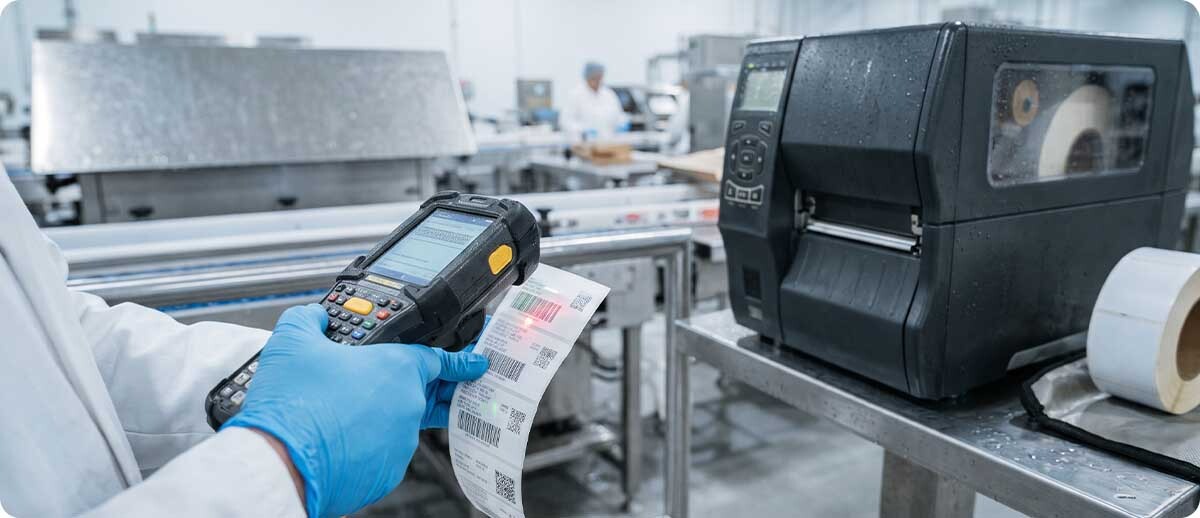
When a lot code label won't scan at the next dock, it usually comes down to one of these:
- Faint print. Darkness set too low or print speed too high. See why your barcodes are faint.
- Frost or condensation on the label face, or a label that lifted because it was applied to a cold, wet case.
- Scuffed direct thermal labels that rubbed against other cases on the pallet or in the truck.
- Bars too small for the printer. Squeezing a long GS1-128 onto a small label at 203 dpi can make bars too thin to read. A 300 dpi printer helps; our DPI guide explains when.
- Bad placement. A label wrapped around a corner or stuck over a box seam won't scan cleanly.
How Should You Test a New Lot Code Label?
Before you commit to a full order, run a real-world test. Print a few dozen labels on the stock and ribbon you plan to use, apply them the way your line will, and send those cases through your actual cooler, freezer, and truck. Then scan them at the receiving end after 48 hours. If you have access to a barcode verifier, check the grade too. GS1 calls for a grade of C or better on GS1-128 logistics barcodes. A small test run costs far less than relabeling a load your buyer rejected.
Buy Right
Ordering Lot Code Labels
How Many Lot Code Labels Should You Keep on Hand?
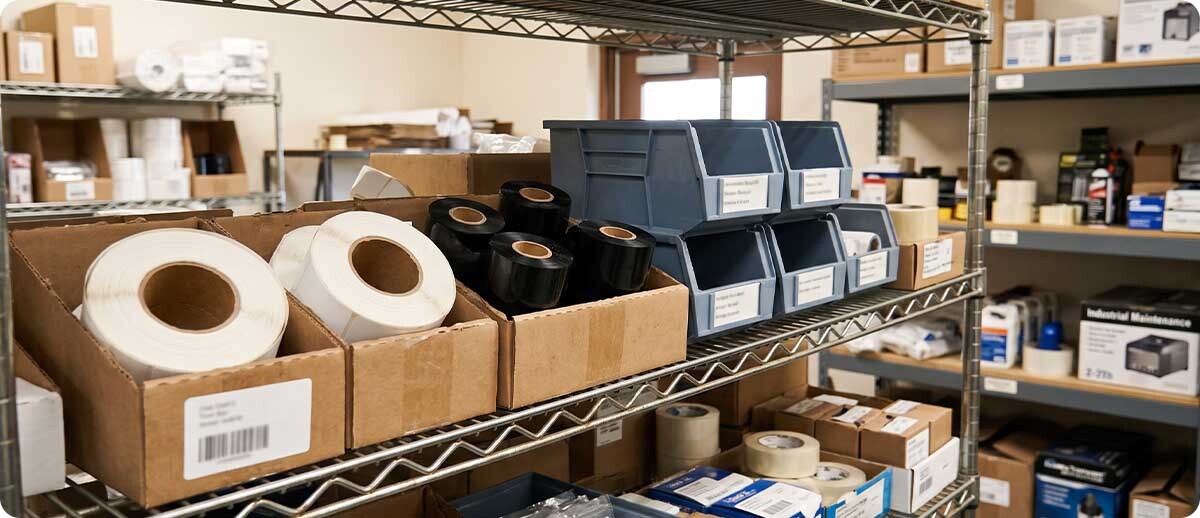
Start with cases per day times working days, then add a buffer for setup labels and reprints. For most plants, two to three months of supply on the shelf is the sweet spot: enough to ride out a lead time without tying up cash or storage. Industrial printers usually take rolls on a 3-inch core, while desktop printers often need 1-inch cores, so check before you order. Our post on core sizes explains why the wrong core jams printers.
Store rolls in a cool, dry spot in their original packaging. Direct thermal labels are sensitive to heat and light even before they're printed, so keep them away from dock doors and windows. And plan to reorder ribbon with your labels so you never have one without the other.
FAQ
Quick Questions
Do You Need a Separate Label for FSMA 204?
Usually not. Most food companies can add the lot code and key dates to the case label they already print. The bigger question is whether your current label stock and print method will survive your cold chain and still scan at the next dock.
Can You Print Lot Codes on Direct Thermal Labels?
Yes, for dry products that move quickly and stay out of heat and sunlight. For refrigerated, frozen, or long-storage products, thermal transfer is the safer choice because the print won't fade or scuff off before the case reaches the receiver.
Does FSMA 204 Require GS1 Barcodes?
No. The rule doesn't require any specific barcode or label format. GS1-128 is the most widely used format in food distribution, though, and many buyers ask for it, so it's the practical default.
What Labels Work Best for Frozen Food Cases?
Synthetic labels with a freezer-grade adhesive, printed by thermal transfer with a wax-resin or resin ribbon. Apply them to dry cases before freezing, and check the label's minimum application temperature, or use a freezer-grade adhesive made for cold application.
A lot code is only useful if the next person in the chain can read it. Get the label size, material, adhesive, and ribbon right for where your cases actually go, test them in your real cold chain, and FSMA 204 gets a lot easier. If you're not sure which stock fits your printer and your products, the team at Thermal Printer Supplies can help you match it. You can browse our thermal labels and thermal transfer ribbons in the meantime.
Keep Reading
Customers Also Checked These Out