
Wax vs. Wax-Resin vs. Full Resin Ribbon: How to Choose the Right Grade for Your Application
Posted by Thermal Printer Supplies on Jun 10th 2026
By Thermal Printer Supplies | Thermal Ribbon Guide | Wax vs. Wax-Resin vs. Full Resin
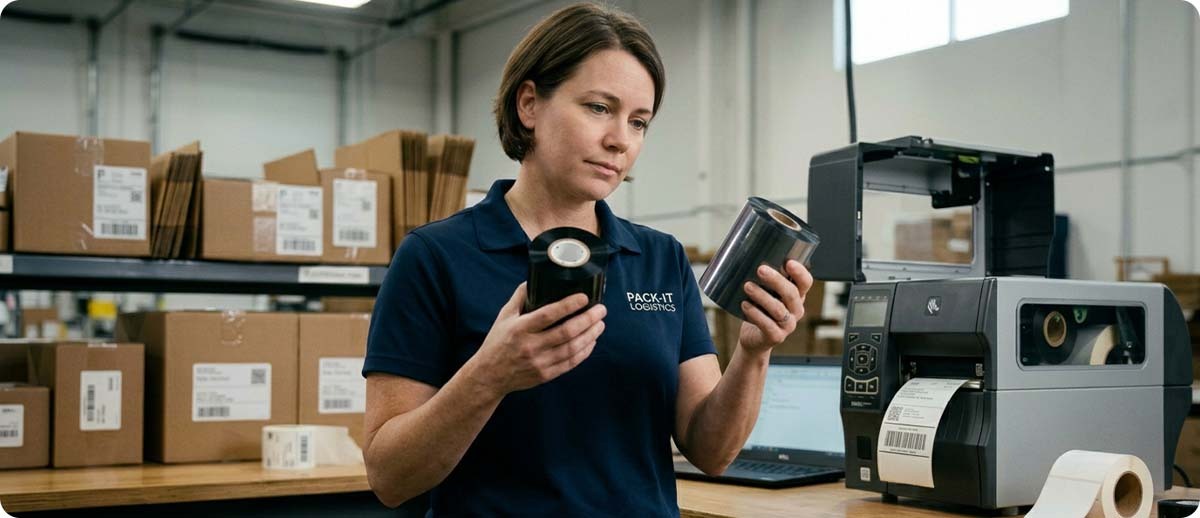
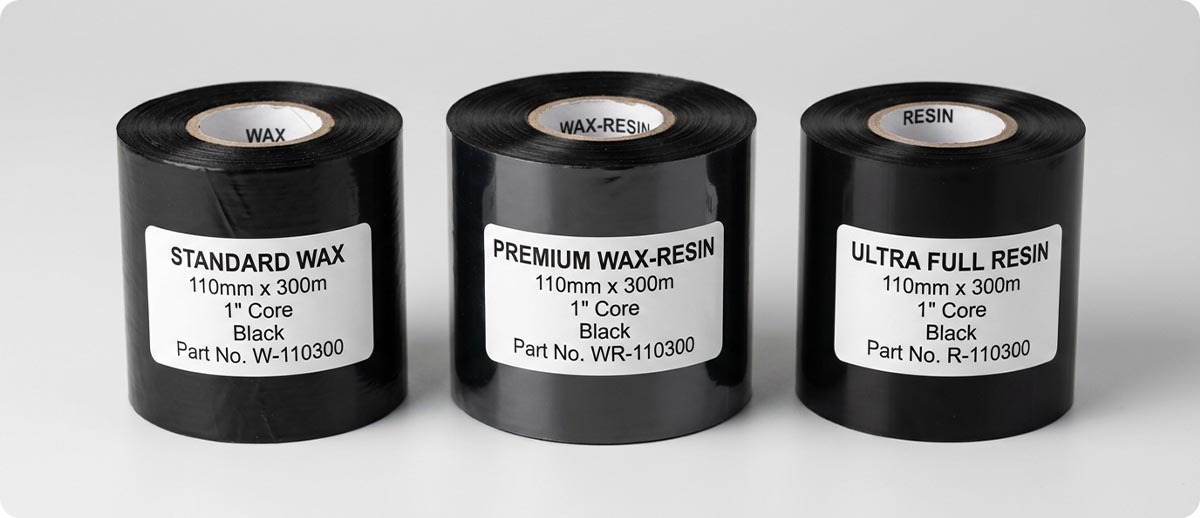
There are three types of thermal transfer ribbon: wax, wax-resin, and full resin. They look almost identical when you hold them in your hand. They all produce black printed output. The difference is in what that printed image can withstand after it leaves the printer.
Wax ribbon is the most common and the least expensive. It works great in a lot of situations and is overkill to upgrade away from if your labels are doing their job. Wax-resin is the middle ground, more durable, works on a wider range of label materials, and costs a bit more. Full resin is the toughest of the three, built for labels that need to survive harsh conditions, chemicals, or extreme temperatures.
The decision comes down to two things: what kind of label stock you are printing on, and what environment that label will live in after it is applied. Get those two answers right and the ribbon choice almost makes itself.
The Three Ribbon Grades Explained
What is wax ribbon and when should you use it?
Wax ribbon is made primarily from a wax-based ink that melts and transfers to the label surface when the printhead applies heat. It is the most affordable ribbon type and it works well for standard paper labels in everyday environments.
Think shipping labels, inventory tags, retail shelf labels, office barcode labels, anything that lives in a climate-controlled space, gets scanned within a reasonable timeframe, and does not need to survive rough handling. Wax ribbon handles those jobs perfectly well and there is no reason to pay more for a higher grade if your application fits that profile.
Where wax falls short is durability. It scratches relatively easily. It does not hold up well against moisture, chemicals, or prolonged outdoor exposure. And it only works properly on paper label stock. If you try to use wax ribbon on a synthetic polyester or polypropylene label, the ink does not bond properly and you end up with a label that smears or rubs off within hours.
If your labels are standard paper, applied indoors, and handled gently, wax ribbon is your answer. It is the workhorse of the thermal transfer world for good reason.
What is wax-resin ribbon and when does it make sense?
Wax-resin ribbon blends wax and resin inks together, typically around a 50/50 mix. That blend gives you noticeably better scratch resistance, better moisture resistance, and the ability to print on both paper labels and matte synthetic labels. It is the middle option for a reason, covering more ground than wax without jumping all the way to the cost of full resin.
Wax-resin is the right call when your labels are going somewhere that might see some wear. A label on a product that gets handled frequently. A tag in a warehouse where forklifts and pallets move around it. An outdoor label that needs to last a season. A healthcare label that might get wiped down. A food service label that might see some moisture. In all of those situations, wax ribbon is not quite enough, but you do not necessarily need the full chemical and thermal resistance of resin either.
Wax-resin is also the ribbon to reach for if you are printing on matte synthetic label stock, including polypropylene, polypropylene matte, or matte polyester. The wax-resin ink bonds to those surfaces in a way that standard wax does not. If you have switched to synthetic labels for any reason and are still running wax ribbon, you have almost certainly already noticed the smearing problem.
What is full resin ribbon and when is it worth the price?
Full resin ribbon is made with a resin-based ink that requires more heat to transfer and bonds differently to the label surface. The result is an image that is significantly more resistant to chemicals, abrasion, extreme temperatures, and UV exposure than either wax or wax-resin.
Resin ribbon is not for everyday warehouse shipping labels. It costs more per roll and requires a slightly higher darkness setting to transfer cleanly. The cases where it earns its price are specific and real. Chemical drum labels that will be in contact with solvents. Outdoor asset tags that will sit in direct sun for months. Laboratory specimen labels that get autoclaved. Electronics component labels that need to survive a solder reflow process. Compliance labels in pharmaceutical manufacturing where the label is required to remain legible through the full product lifecycle.
Resin ribbon also works on gloss synthetic labels, including gloss polyester and gloss polypropylene, where wax-resin does not transfer cleanly. The gloss surface of those materials requires the full bonding chemistry of resin ink to hold the image.
If your labels do not live in conditions that require that level of durability, resin is unnecessary spending. If they do, nothing else will do the job as well.
The Quick Reference: Which Ribbon for Which Situation
| Your Situation | Ribbon Grade |
|---|---|
| Standard paper labels, indoor environment, light handling | Wax |
| Paper labels in higher-wear or damp environments | Wax-Resin |
| Matte synthetic labels (polypropylene, matte polyester) | Wax-Resin |
| Outdoor labels, frequent handling, moderate chemicals | Wax-Resin |
| Gloss synthetic labels (gloss polyester, gloss polypropylene) | Resin |
| Chemical drums, solvent exposure, harsh industrial environments | Resin |
| Laboratory labels, autoclave, extreme temperatures | Resin |
| Pharmaceutical or compliance labels with long service life requirements | Resin |
The 10-Second Field Test for the Wrong Ribbon
How do you know if your current ribbon is the right one for your labels?
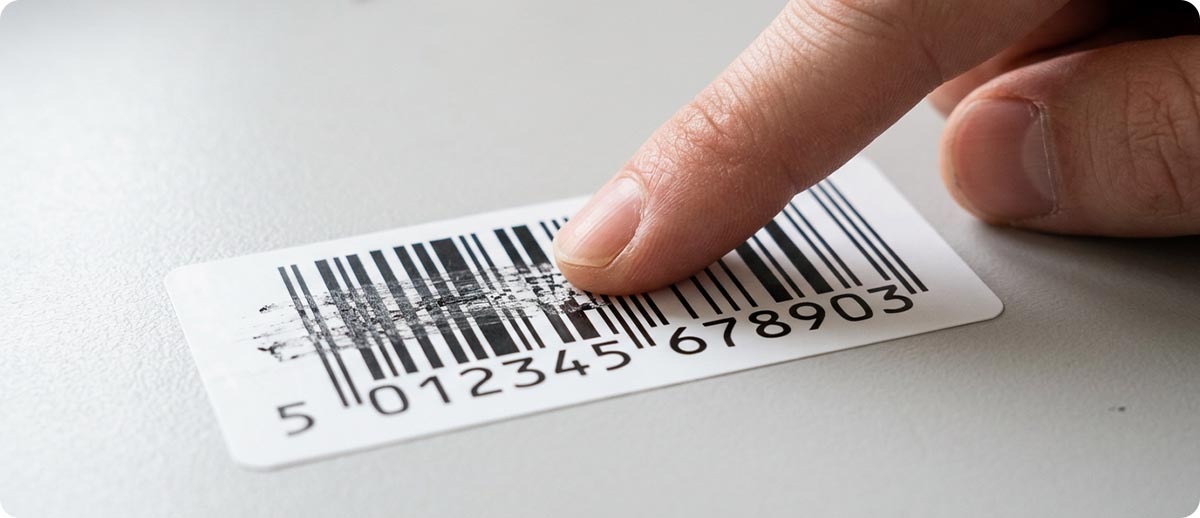
Print a label and let it sit for a couple of minutes to cool and set. Then run your fingernail firmly across the printed barcode or text. Not lightly. Actually press and drag across the image.
If the image smears, smudges, or the ink comes off on your fingernail, the ribbon is either the wrong grade for the label material, or the darkness setting is too high and creating excess melted ink that is sitting on the surface instead of bonding to it. Either way, something needs to change.
If the image holds clean with no transfer to your fingernail, the ribbon is bonding correctly to the label surface and the grade is appropriate for that material.
This test does not tell you whether the ribbon will survive chemical exposure or prolonged outdoor use. Those durability requirements go beyond what a scratch test measures. But it does tell you immediately whether the ribbon and label chemistry are compatible, which is the most common mismatch in any thermal transfer setup.
Why the Wrong Ribbon Also Hurts Your Printhead
Most people think about ribbon grade in terms of label durability, which is the right starting point. But running the wrong ribbon also affects your printhead, and that matters for a different reason entirely.
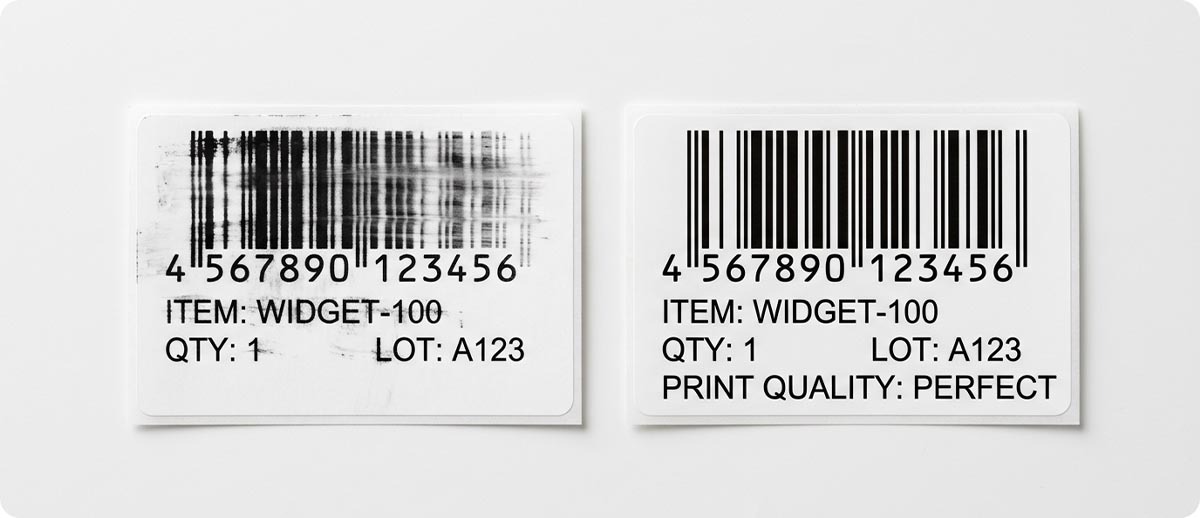
When wax ribbon is used on a synthetic label that needs wax-resin or resin, the ink does not transfer cleanly. Excess wax residue accumulates on the printhead surface with every print cycle. Over time that residue bakes into the heating elements in a process called glazing, which reduces print quality and shortens printhead life. Regular cleaning helps, but it does not fully compensate for a chemistry mismatch that creates excess residue on every label.
Using the correct ribbon grade for your label material is therefore both a label quality decision and a printer maintenance decision. Getting it right reduces cleaning frequency, extends printhead life, and keeps your output consistent without requiring constant adjustment.
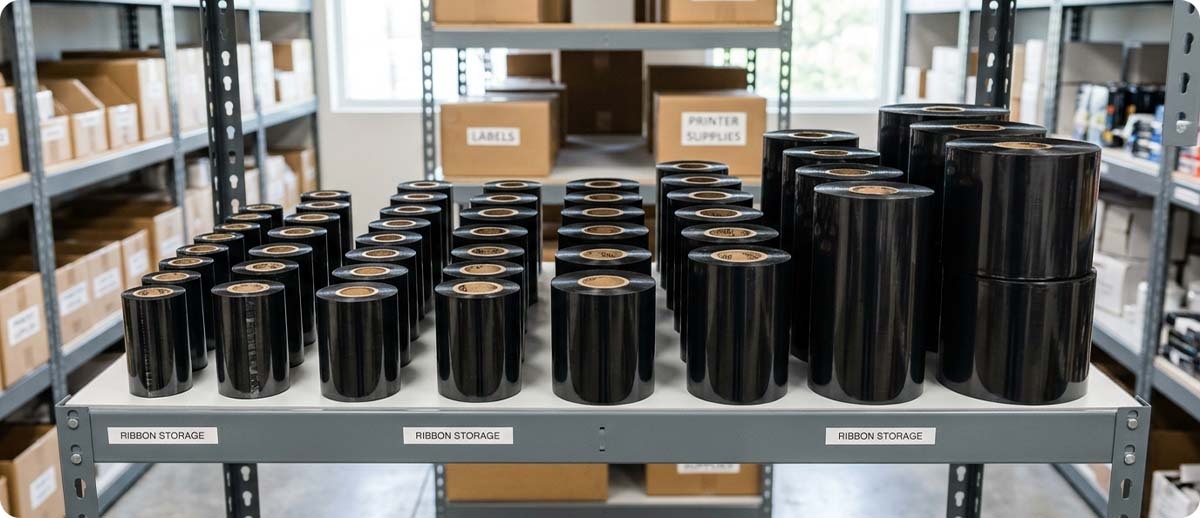
Zebra Ribbon at Thermal Printer Supplies
TPS carries genuine Zebra ribbon across all three grades in a full range of widths and roll lengths. All ribbon ships from Zebra certified inventory, not third-party substitutes.
Zebra Wax Ribbon
Zebra 2000 Standard Wax (02000BK series): the everyday workhorse for coated paper labels in standard indoor environments. Available in a wide range of widths and lengths.
Zebra 6000 Wax (06000BK10245): high-performance wax for coated paper labels where print quality and edge definition matter at higher print speeds.
Shop Wax Ribbon →Zebra Wax-Resin Ribbon
Zebra 3200 Wax-Resin (03200BK10245-EA): premium wax-resin for coated paper and matte synthetic labels. Chemical and scratch resistant. Good for outdoor, chemical drum, and high-handling applications.
Zebra 5555 Wax-Resin (05555GS08407): standard wax-resin grade for coated paper and matte synthetics in moderate-wear environments.
Zebra 6100 Wax-Resin (06100BK06045): high-performance wax-resin with excellent print quality and durability on synthetic and coated paper labels.
Shop Wax-Resin Ribbon →Zebra Full Resin Ribbon
Zebra 5095 Resin (05095GS06407 / 05095BK06045): high-performance resin for gloss paper and gloss or matte synthetic labels. Excellent chemical, abrasion, and moisture resistance. Used in laboratory, pharmaceutical, outdoor, and industrial applications.
Multiple widths available from 2.36" to 4.33". Contact TPS if you need a specific width or case quantity not listed.
Shop Full Resin Ribbon →Frequently Asked Questions
Can I use resin ribbon on paper labels?
Technically yes, but it is not recommended for most situations. Resin ribbon requires a higher darkness setting to transfer cleanly to paper than wax or wax-resin does. Running resin on paper at the darkness levels needed for good transfer puts more heat through the printhead per label than necessary, which accelerates printhead wear without any benefit to label quality. If you have paper labels in a demanding environment, wax-resin is usually the better answer. It gives you better durability than wax without the printhead stress of running full resin on paper.
My labels are smearing. How do I know if it is a ribbon problem or a darkness setting problem?
Do the scratch test on a freshly printed label. If the image smears but the ink does not lift off on your fingernail, the darkness setting may be too high and the ink is melting without fully bonding. Try reducing the darkness by two or three steps and reprinting. If the image smears and ink does come off on your fingernail as a powdery residue, the ribbon is not bonding to the label surface at all, which is a chemistry mismatch between the ribbon grade and the label material. Reducing darkness will not fix that. Switching to the correct ribbon grade will.
Does ribbon width matter? My ribbon is narrower than my label.
Yes, ribbon width matters. If your ribbon is narrower than your label, the section of the label that extends beyond the ribbon width will print without any ink transfer. You will get blank areas on every label in the same position. Ribbon should be at least as wide as your label. Many operations size their ribbon slightly wider than their label to ensure full coverage and to avoid the edge of the ribbon leaving a faint mark on the printhead face.
We are switching from paper labels to synthetic labels. Do we need to change our ribbon?
Almost certainly yes. If you are switching to matte synthetic labels like polypropylene or matte polyester and you are currently running wax ribbon, you need to move to at least wax-resin. Wax does not bond reliably to most synthetic label surfaces. If you are switching to gloss synthetic labels like gloss polyester, you need full resin. The scratch test will confirm the mismatch if you try the old ribbon on the new label stock. The ink will either smear immediately or lift off in the fingernail test. Save yourself the wasted labels and ribbon by making the switch at the same time you change the label stock.
Not sure which ribbon grade is right for your specific label stock and application? Our team can help you match them up before you order. Fill out the form below with your label material, printer model, and what the label needs to survive, and we will point you to the right ribbon before you end up troubleshooting smeared barcodes on the floor.