
Dissolvable Labels in Foodservice: When They're Worth It and How to Buy Them Right
Posted by Thermal Printer Supplies on Oct 22nd 2026
Foodservice Labels · Dissolvable Labels | By Thermal Printer Supplies
In This Post
Every prep kitchen labels its containers. Most of them then pay someone to scrape those labels back off. Dissolvable labels wash away under running water, leaving nothing to scrub, nothing for an inspector to flag, and nothing to clog the drain. Here's how they work, where they earn their higher price, and what to know before you order a case.
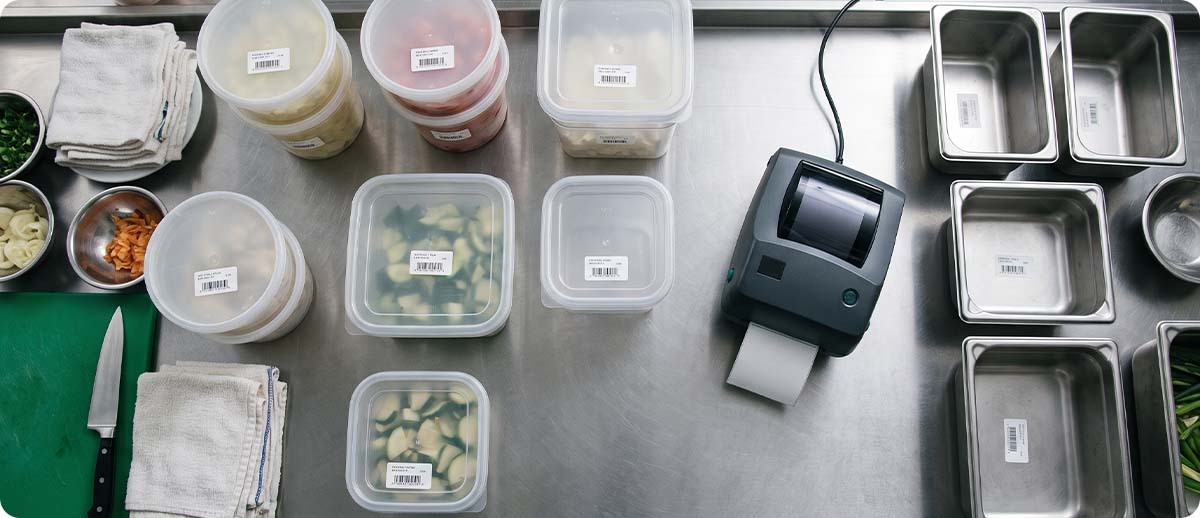
If you run a restaurant, commissary, or institutional kitchen, you already know the routine. Containers get labeled with a prep date, used, and sent to the dish station, where someone picks at a half-washed label with a fingernail or a scraper. Multiply that by every pan, lid, and tub that cycles through in a day, and labels turn into real labor. Dissolvable labels are built to make that step disappear.
Start Here
What Are Dissolvable Labels?
How Do Dissolvable Labels Actually Work?
The paper
Dispersible Facestock
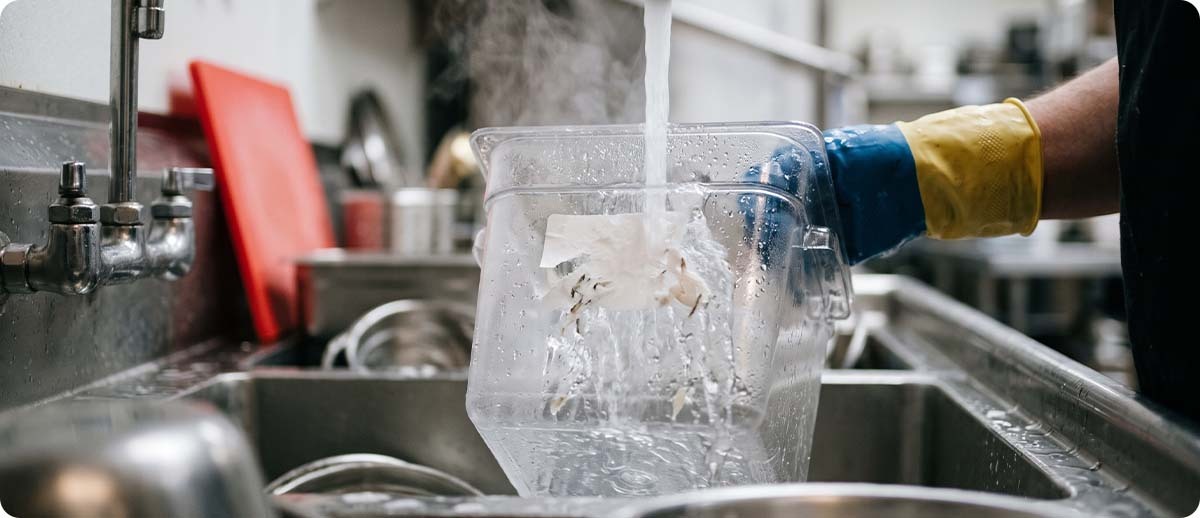
The label face is a special paper that breaks apart into tiny fibers under running water instead of peeling off in strips.
The adhesive
Water-Soluble Glue
The adhesive dissolves along with the paper, so there's no sticky film left on the pan, lid, or tub for bacteria to collect in.
The print
Direct Thermal or Ribbon
Most kitchen rolls are direct thermal, so there's no ribbon. Industrial versions for processing plants are often thermal transfer. Either way, prep dates, item names, and allergens print right from your label printer.
Dissolvable labels cost more per label than standard paper. They pay off in the minutes your dish crew stops spending on scraping.
The Problem
Why Kitchens Make the Switch
What's Wrong With Regular Labels on Food Containers?
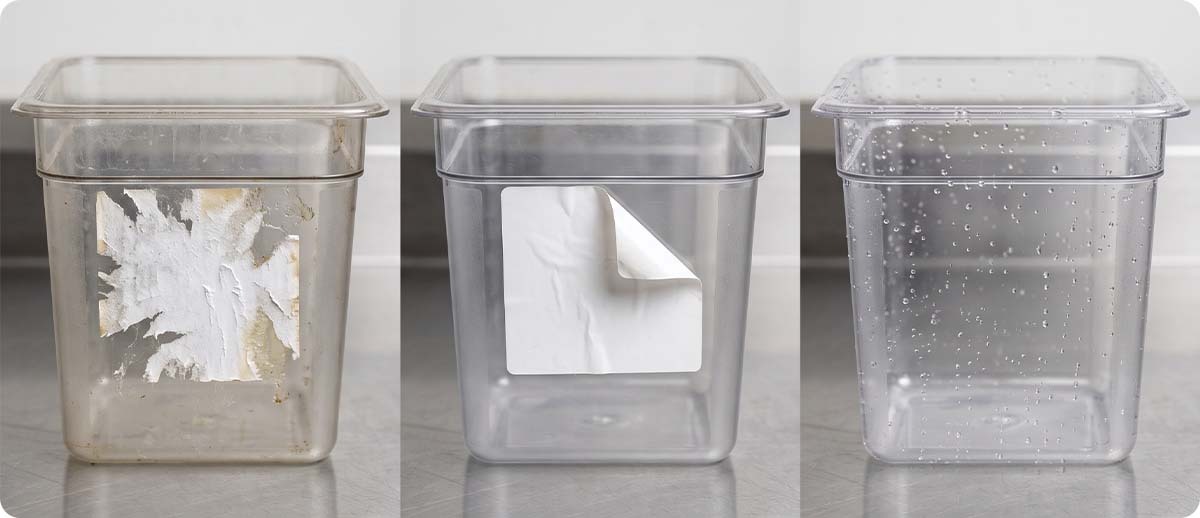
Standard labels are built to stay put, which is exactly the problem in a kitchen. The adhesive leaves a tacky film that collects food debris and bacteria, and a health inspector who sees old adhesive on a clean container may call it out. Scraping takes time and scratches plastic containers. Bits of paper that do come off end up in sinks, dish machines, and drain lines.
How Do Dissolvable Labels Help With Date Marking Rules?
Under the FDA Food Code (section 3-501.17), ready-to-eat, time/temperature control for safety (TCS) foods held cold for more than 24 hours must be date marked. They can be held up to seven days at 41°F or below, freezing pauses that clock, and the label has to show the prep date (plus freeze and thaw dates if the food was frozen). Most states adopt a version of the Food Code, so check with your local health department for the exact rules you're inspected against.
Here's where dissolvable labels help: a date label is only useful if the old one is gone. A leftover label from last Tuesday stuck under today's makes it harder for staff to read the right date, and that's the kind of thing inspectors notice. When every label washes off completely, every container starts clean.
Compare
Dissolvable vs. Other Food Labels
How Do Dissolvable Labels Compare to Standard and Removable Labels?
| Label Type | Standard Paper | Removable | Dissolvable |
|---|---|---|---|
| How it comes off | Scraping or soaking | Peels off by hand in one piece | Washes away under running water |
| Residue left behind | Often leaves adhesive | Little to none if peeled on time | None |
| Work at the dish station | Most | One peel per container | Least: rinse and go |
| Handles moisture | Well | Well | Poorly: wet hands or sweating containers can lift it early |
| Unused roll shelf life | Long (store cool and dry) | Long (store cool and dry) | About 6 months |
| Cost per label | Lowest | Moderate | Highest |
| Best fit | Packaging that leaves the building | Containers labeled once and peeled | Reusable pans and tubs that cycle daily |
On a phone, swipe the table sideways to see all three label types.
Decide
Are Dissolvable Labels Right for Your Kitchen?
Best fit · High-volume prep
When Are Dissolvable Labels Worth the Higher Price?
They earn their cost wherever the same containers cycle through prep, storage, and the dish station every day: quick-service and fast-casual kitchens, commissaries that prep for multiple locations, and hospital, school, and corporate dining kitchens. The more labels your crew removes per shift, the faster the savings add up.
They also suit hot holding. Zebra's 8000D Dissolvable High-Temp version, for example, is rated to stay readable up to 140°F, so it holds up on a line under heat lamps.
Best fit · Wet environments
When Should You Stick With Removable Labels?
If containers sit in ice baths, sweat in a humid walk-in, or get handled with wet gloves all day, a dissolvable label may start breaking down before you want it to. A removable label holds up to moisture and still comes off clean by hand, which makes it the safer pick for wet stations and low-turnover containers.
Worth a second look
What About Food That Leaves the Kitchen?
Takeout, grab-and-go, and catering packaging should use standard or removable labels. A customer's container can sit in a wet cooler or pick up condensation in a delivery bag, and you don't want the allergen or use-by information washing off before anyone reads it.
Buy Right
Ordering and Storing Dissolvable Labels
How Many Rolls Should You Order at Once?
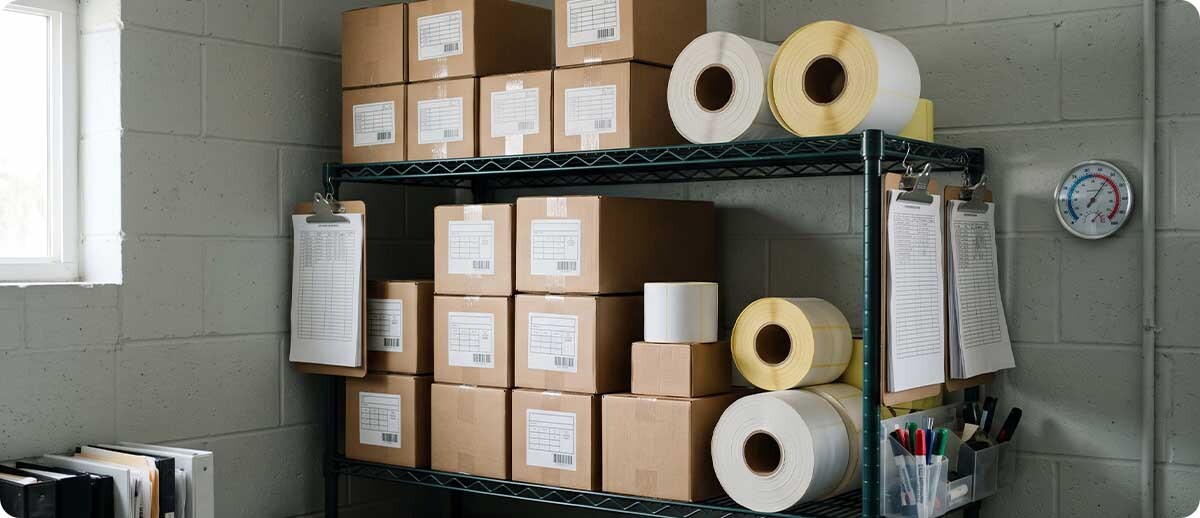
Less than you'd think. Dissolvable labels typically have a shelf life of about six months from manufacture, which is much shorter than standard labels. Buying a year's supply to save on price can leave you with rolls that don't dissolve or stick the way they should. A one to three month supply is a safer target, and rotate your label stock the same way you rotate food: oldest rolls first.
Store unused rolls around 72°F and 50% relative humidity, away from the dish station, steam tables, and anywhere they could get splashed. Humidity is the enemy of a label designed to break down in water.
Which Dissolvable Labels Does Thermal Printer Supplies Carry?
We carry two families of dissolvable labels, built for two different setups. Pick based on the printer you already have.
For kitchen desktop printers
Zebra's 8000D Dissolvable labels are direct thermal, so there's no ribbon, and they come on 1-inch cores with perforations between labels, the setup most restaurant and commissary label printers use. They disperse in a stream of warm water. Both sizes are made to order, so request a quote for pricing and lead time.
Direct thermal · 1 in core
Zebra 8000D Dissolvable 2 in x 1 in
Part 51927. 2,337 perforated labels per roll, 5 in roll diameter. A good all-purpose size for prep containers and lids.
Learn more →Direct thermal · 1 in core
Zebra 8000D Dissolvable 1 in x 1 in
Part 10046189S. 1,440 perforated labels per roll, 4 in roll diameter. Sized for small cups, ramekins, and portion containers.
Learn more →For processing plants and Brady printers
Brady's B-403 water dissolvable paper washes away completely, label and adhesive, in about 30 seconds of warm water, and holds up to humidity, abrasion, and temperatures from -94°F to 212°F. The THT rolls below are continuous thermal transfer stock on 3-inch cores for Brady printers like the i5100, i7100, BBP81, and IP series, a good match for food and beverage plants and labs labeling totes, bins, and reusable containers.
| Width | Roll Length | Brady Part # |
|---|---|---|
| 0.5 in | 100 ft | THT-500-403 |
| 0.75 in | 100 ft | THT-750-403 |
| 1 in | 100 ft | THT-1000-403 |
| 1.5 in | 100 ft | THT-1500-403 |
| 2 in | 100 ft | THT-2000-403 |
| 1.125 in | 300 ft | THT-1125-403-WT |
| 2.25 in | 300 ft | THT-2250-403-WT |
| 3 in | 300 ft | THT-3000-403-WT |
| 4 in | 300 ft | THT-4000-403-WT |
B-403 is also available in cartridges and pre-sized labels for Brady's handheld and desktop label printers. Tell us your printer model and we'll match the right one. Whichever label you choose, ask for food-contact documentation, such as FDA 21 CFR 175.105 for indirect food contact, if it will go on food containers.
Will Dissolvable Labels Work in My Printer?
Most desktop direct thermal printers used in kitchens can run dissolvable labels. Before you order, match three things to your printer: the label width, the core size (usually 0.5 inch or 1 inch on desktop printers), and the maximum roll diameter the printer accepts. Our guide to label core sizes explains why the wrong core is one of the most common causes of jams. After you load a new label type, run a media calibration so the printer finds the gap between labels correctly, and check print darkness on the first few labels.
FAQ
Quick Questions
How Long Do Dissolvable Labels Take to Dissolve?
Usually seconds, not minutes. Under a steady stream of warm water, many dissolvable labels break down in roughly 15 to 30 seconds. Hotter water and stronger pressure speed things up, and they also break down in a commercial dish machine.
Are Dissolvable Labels Safe Around Food?
They're designed to go on containers, not directly on food. Look for labels that meet FDA 21 CFR 175.105 for indirect food contact. Zebra's 8000D Dissolvable High-Temp label, for example, carries that rating. If a supplier can't tell you which regulation a label meets, keep looking.
Can Dissolvable Labels Go in the Freezer?
Yes, as long as you apply them correctly. Zebra rates its 8000D dissolvable labels for service down to -40°F, but the minimum application temperature is 21°F. Apply the label to a dry container before it goes into the freezer, not after it's already frosted over. For more on cold-storage labeling, see why labels fail in the freezer.
Dissolvable labels aren't the cheapest roll on the shelf, but in a kitchen where the same pans cycle every day, they pay for themselves in the time your crew stops spending at the scraper. If you're not sure which size, core, or quantity fits your printer and your prep volume, the team at Thermal Printer Supplies can help you match the right roll, whether that's a Zebra direct thermal roll for your kitchen printer or Brady stock for your plant. In the meantime, you can browse our thermal labels and the rest of our barcode labels.
Keep Reading
Customers Also Checked These Out
Label Troubleshooting
Why Your Labels Are Bubbling, Peeling, or Falling Off After Application
Read the post →