
Why Your Labels Are Bubbling, Peeling, or Falling Off After Application
Posted by Thermal Printer Supplies on Aug 19th 2026
By Thermal Printer Supplies | Label Troubleshooting | Label Adhesion Failure Guide
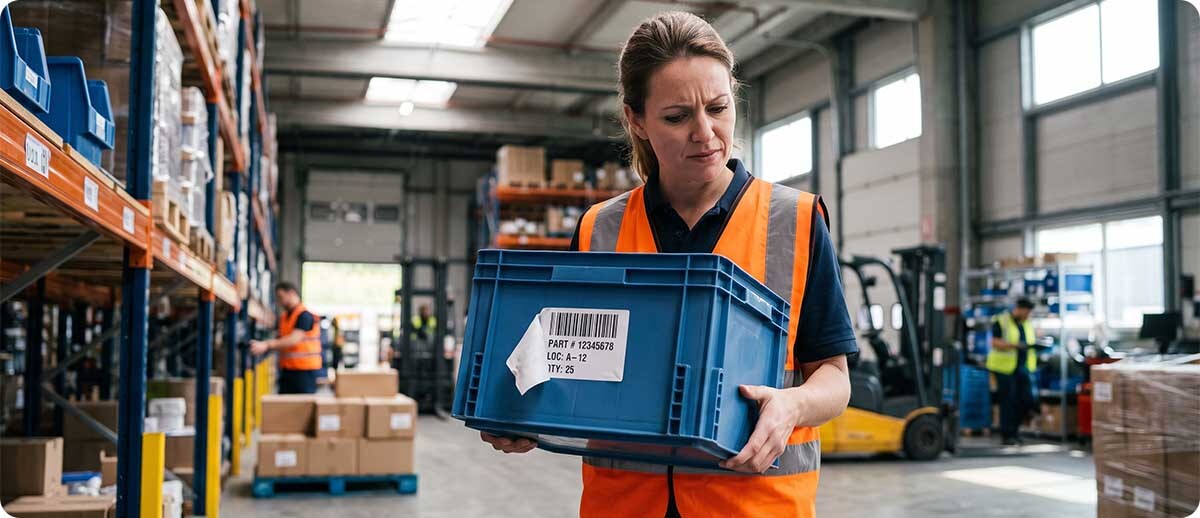
Adhesion failures are frustrating because they're invisible at the time of application. The label goes on fine, looks good, scans perfectly, and then a day or a week later it's bubbling up, peeling at a corner, or gone entirely. By the time you find out the label failed, the item may have already moved through the supply chain, been shelved, or been applied to an asset that's now out in the field. Understanding why it happened is the first step to making sure it doesn't happen again.
The Three Most Common Causes of Label Adhesion Failure
1. The surface has low surface energy
Surface energy is a property of materials that determines how well adhesives bond to them. High surface energy surfaces like glass, steel, and aluminum bond readily with standard adhesives. Low surface energy surfaces like polyethylene, polypropylene, HDPE containers, powder-coated metals, and many plastics resist standard adhesives because the adhesive can't wet out and make full contact with the surface.
If your labels are going on plastic containers, coated packaging, painted or powder-coated equipment, or any surface that feels slightly waxy or slick, a standard permanent adhesive may not create a sufficient bond. The label appears stuck initially because it's being held by contact pressure, but over time it peels because the adhesive never fully bonded to the substrate. The fix is a high-tack or aggressive adhesive formulated specifically for low-energy surfaces.
The Zebra Z-Ultimate 4000T High-Tack is specifically designed for this scenario. The high-tack permanent acrylic adhesive is formulated to penetrate the low surface energy of plastics and coated surfaces and create a durable bond that holds through normal handling. If you're applying labels to HDPE totes, plastic bins, painted steel racks, or powder-coated equipment and seeing peeling, this is the material to look at first.
2. The surface wasn't clean or dry at the time of application
This is the cause people overlook most often because it doesn't seem like a materials problem. Adhesion is a surface contact phenomenon. If there's oil, dust, condensation, release agent residue, or any contamination between the adhesive and the surface, the adhesive bonds to the contaminant rather than the substrate. When the label peels, it takes the contaminant with it, and the underlying surface looks clean and undamaged because the adhesive never touched it.
This shows up as edge peeling on containers that are handled with bare hands before labeling (skin oils are enough to prevent proper adhesion at the edges), as complete label loss on surfaces that come off a production line with release agent or mold release residue, and as bubbling on surfaces that have moisture or condensation that wasn't visible at the time of application.
The fix is surface preparation, not label material. IPA wipe-down before application removes most contaminants and dramatically improves adhesion on clean substrates. For production line applications where manual wipe-down isn't practical, reviewing the upstream process for contamination sources is the right starting point.
3. The label adhesive isn't rated for the environment after application
A label can apply perfectly and bond well in the application environment, then fail later when it's exposed to conditions the adhesive wasn't designed for. The three most common post-application environments that cause adhesion failure are heat, moisture and humidity, and chemical exposure.
Heat. Standard paper labels with standard adhesives soften and release when exposed to sustained heat above their rated temperature. If labels are going on equipment, containers, or products that get hot in use, in transit, or in storage, the adhesive needs to be rated for that temperature range. The Z-Ultimate 4000T polyester labels are rated to withstand temperature exposure up to 300°F, which covers most industrial heat exposure scenarios.
Moisture and humidity. Paper labels absorb moisture and swell, which breaks the adhesive bond at the edges and causes bubbling in the face stock. High-humidity environments, washing, and outdoor exposure all contribute to this failure mode. A synthetic label face stock, polyester or polypropylene, doesn't absorb moisture the way paper does and maintains dimensional stability in humid conditions. If your labels are in a humid environment or getting wet after application, a synthetic label stock is the right material.
Chemical exposure. Solvents, cleaning agents, lubricants, and process chemicals can attack standard adhesives and cause label loss. The Z-Ultimate 4000T is rated for resistance to moderate chemicals including many common industrial cleaning agents, though it's not recommended for acetone, MEK, TCE, xylene, or IR reflow exposure. If your application involves specific chemical exposure, reviewing the label's chemical resistance data sheet against the specific chemicals involved is the right step before spec'ing the material.
Diagnosing Your Specific Failure
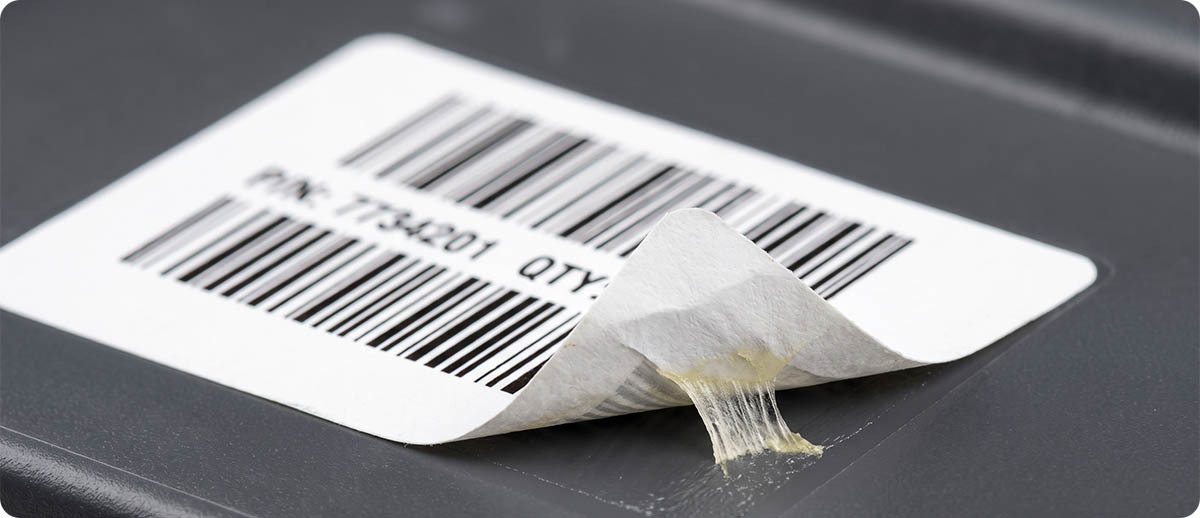
Labels are peeling at the edges but the center is still stuck
Edge peeling usually points to one of two things. Either the surface has low surface energy and the adhesive bond at the edges (where there's less contact pressure from application) was never strong enough to hold long term. Or the surface at the edges had contamination, typically from handling or from the edge of the surface being harder to clean than the center. Try a high-tack adhesive and an IPA wipe before application and see if the edge peeling resolves.
Labels are bubbling under the face stock
Bubbling after application almost always means moisture. Either the surface had moisture or condensation at the time of application that the adhesive bonded over rather than through, or the label material is absorbing environmental moisture and swelling. If bubbling happens quickly after application, surface moisture at the time of application is the likely cause. If it happens gradually over days or weeks in a humid environment, the label face stock is absorbing ambient moisture. Switch to a synthetic polyester or polypropylene face stock that doesn't absorb moisture and the bubbling should resolve.
Labels are falling off entirely after a short time
Complete label loss quickly after application usually points to surface energy or contamination. The adhesive made initial contact but never formed a lasting bond. Check the substrate type first. If it's a plastic container, tote, or coated surface, assume low surface energy and test a high-tack adhesive. If the surface is a metal or glass that should bond well with standard adhesive, check for contamination. Clean the surface with IPA, apply a fresh label, and see if it holds. If a clean metal or glass surface still won't hold a label, the adhesive may not be compatible with the specific surface coating or treatment.
Labels are falling off after heat exposure
This is straightforwardly a temperature rating issue. Check the maximum service temperature for your current label material against the temperature the label is actually experiencing. Standard paper labels with rubber-based adhesives typically start failing well below 150°F. If your application involves heat above that range, you need a material rated for the actual temperature. The Z-Ultimate 4000T's 300°F rating covers most industrial heat applications short of direct flame exposure or autoclave sterilization.
The Right Label for Demanding Adhesion Applications at TPS
Zebra Z-Ultimate 4000T (Standard Permanent Adhesive)
Gloss polyester | Permanent acrylic adhesive | Up to 300°F | Up to 3 years outdoors | Moderate chemical resistance
The right choice for demanding industrial environments where standard paper or polypropylene labels don't hold up. Outdoor rated up to 3 years, heat resistant to 300°F, and chemically resistant to most common industrial cleaning agents. Available in white, clear, and silver.
Shop Z-Ultimate 4000T →Zebra Z-Ultimate 4000T High-Tack
Gloss polyester | High-tack aggressive adhesive | Low-energy surfaces | Plastics, coated metals, HDPE
The upgrade when standard adhesive isn't cutting it on plastic containers, coated equipment, or other low surface energy substrates. Same durable polyester face stock as the standard Z-Ultimate 4000T but with an aggressive adhesive formulated to bond where standard adhesives fail.
Shop Z-Ultimate 4000T High-Tack →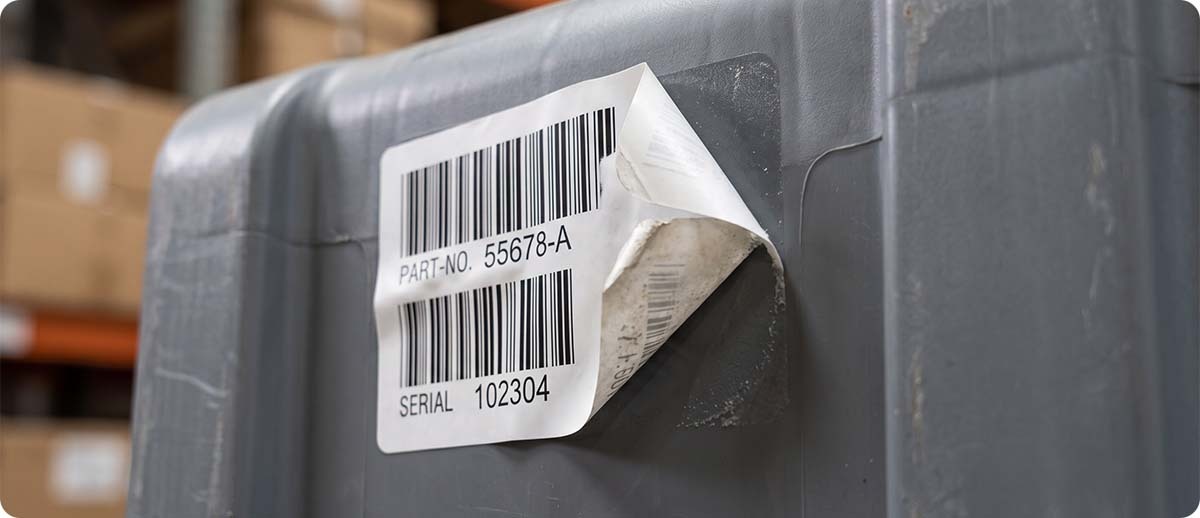
Quick Questions
We clean our surfaces before labeling and still get peeling. What else could it be?
Check what you're cleaning with. Some cleaning agents leave a residue film that's worse for adhesion than the original contamination. IPA at 70% concentration is the most reliable pre-application cleaner for most surfaces and evaporates cleanly without leaving residue. Also check the timing. If you're cleaning and then immediately labeling, the surface may still be cold from evaporation, and cold surfaces reduce adhesive tack. Let the surface return to ambient temperature after cleaning before applying the label.
Can I use any polyester label on a low-energy surface or do I specifically need high-tack?
The face stock material and the adhesive are separate factors. A polyester face stock is more durable than paper but doesn't address the adhesion problem on low-energy surfaces if the adhesive formulation isn't designed for it. You need both the right face stock for the environmental durability requirements and the right adhesive for the substrate surface energy. High-tack adhesive specifically addresses the low surface energy bonding challenge.
We need a label for outdoor use on painted metal equipment. Which material is right?
Painted metal can go either way depending on the paint system. Standard enamel and alkyd paints have reasonably high surface energy and standard permanent adhesive Z-Ultimate 4000T usually bonds well to them. Powder-coated surfaces have lower surface energy and often benefit from the high-tack version. If you're not sure which paint system your equipment uses, the safe choice is the high-tack version since it performs well on both standard and low-energy painted surfaces. For UV and weather resistance, the Z-Ultimate 4000T's 3-year outdoor rating covers most equipment identification applications.
If you're dealing with label adhesion failures and aren't sure whether the issue is the adhesive, the surface, or the environment, fill out the form below and describe what's happening. We can usually identify the cause and point you to the right material pretty quickly.