
Zebra ZT411 vs. ZT610: Do You Actually Need the Premium Industrial Printer?
Posted by Thermal Printer Supplies on Jul 13th 2026
By Thermal Printer Supplies | Industrial Printers | ZT411 vs. ZT610 Buyer's Guide
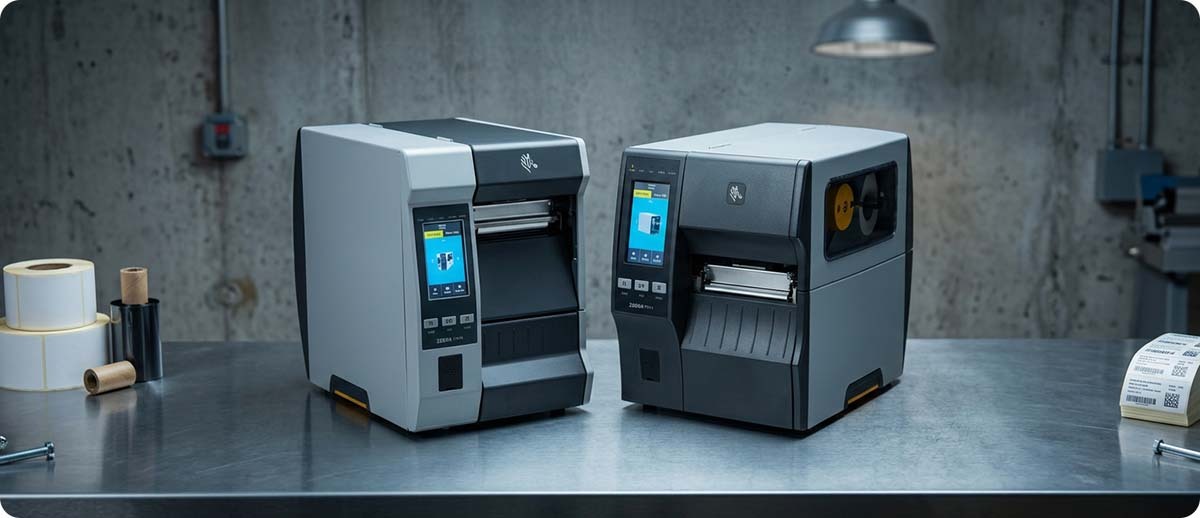
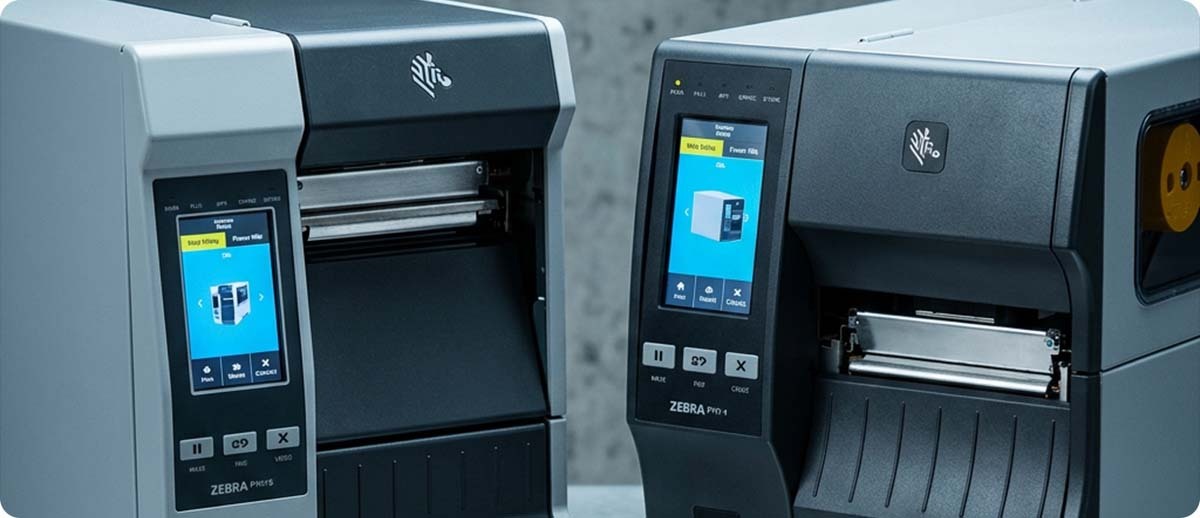
This is one of the most common questions we get from buyers who've already decided they need an industrial Zebra printer. The ZT411 is the mid-range industrial option and one of the most widely deployed industrial printers in the market. The ZT610 sits above it as the premium platform. They're close enough in specs that the decision isn't always obvious, and it's easy to default to the ZT610 because it's the "better" option without thinking through whether that premium actually buys you anything for your specific use case.
Sometimes it does. Sometimes it doesn't. Here's the breakdown.
What They Share
Before getting into the differences, it helps to understand how similar these two are. Both are 4-inch industrial printers with all-metal frames built for 24/7 operation. Both have a 4.3-inch full color touch display. Both print at up to 14 inches per second. Both support 203, 300, and 600 DPI configurations. Both run Link-OS with Zebra's Print DNA suite for remote management, firmware updates, and fleet monitoring. Both support RFID encoding as an optional configuration. Both are available with cutter, peeler, linerless, and rewind media handling options.
If you put the two printers side by side and ran a standard high-volume warehouse label job through both, you probably couldn't tell the difference in the output. The ZT610's advantages don't show up in everyday printing. They show up in specific edge cases, and whether those edge cases describe your operation is the entire decision.
Where They Differ
Ethernet connectivity
The ZT411 uses 10/100 Ethernet. The ZT610 uses Gigabit Ethernet. For most label printing applications, this doesn't matter at all. A barcode label is a tiny data file and even 100 Mbps handles it without any bottleneck. Where Gigabit starts to matter is in high-throughput environments where the printer is processing very large, complex label formats at high speeds, or where IT standardization on Gigabit throughout the facility is a firm requirement. For the majority of operations, 10/100 is fine.
Micro-label precision
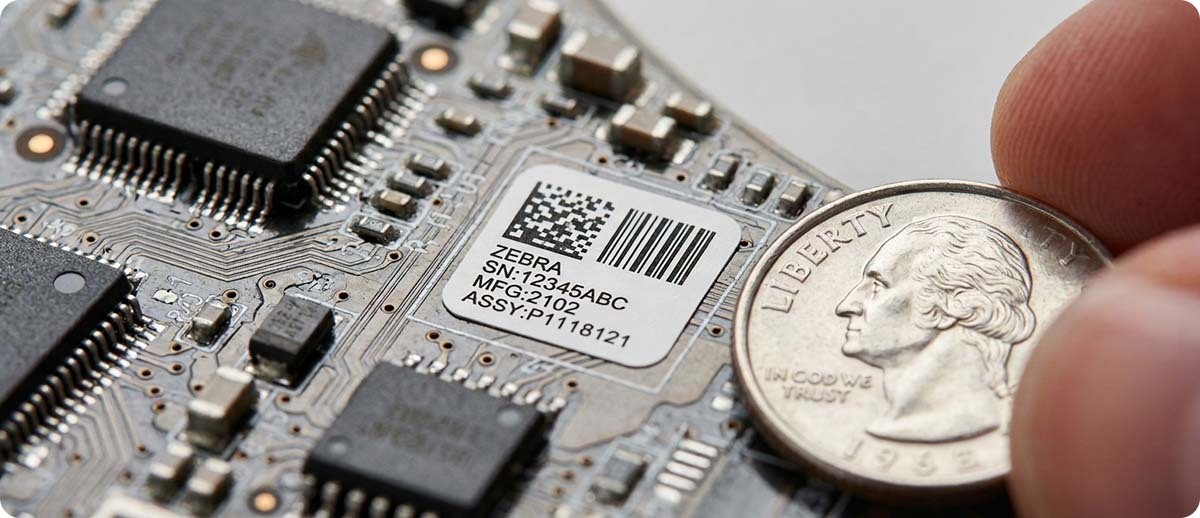
This is the more meaningful mechanical difference. The ZT610 is built to tighter tolerances that allow it to print labels as small as 3mm reliably and repeatedly. Zebra specifically validates the ZT610 for pharmaceutical labeling, electronics component labeling, and other applications where label size drops into the micro range and print registration needs to be extremely precise across a long print run.
The ZT411 at 600 DPI also prints small labels well, and for most applications it's more than adequate. The difference becomes relevant when you're printing labels so small that even minor variation in registration across thousands of labels creates quality issues. If your labels are a reasonable size and you're not in a regulated industry with specific print quality grades, the ZT411 handles 600 DPI work well.
RFID encoding depth
If RFID is part of your printing workflow, this is where the ZT610 pulls clearly ahead of the ZT411. The ZT610 supports tighter RFID inlay spacing down to 0.6-inch pitch, which means you can fit more RFID labels per roll and reduce media waste significantly in high-volume RFID encoding operations. It also uses Zebra's Adaptive Encoding Technology, which automatically optimizes the encoding process for different inlay types rather than requiring manual configuration adjustments when switching inlays.
The ZT411 supports RFID encoding and handles standard RFID label applications well. For basic RFID labeling where you're encoding a standard inlay at standard spacing, the ZT411 works. For high-density RFID encoding, complex inlay types, or environments where inlay media waste is a cost factor, the ZT610's RFID capabilities are genuinely better.
Price
The ZT610 costs more than the ZT411 at every comparable configuration. The premium exists because of the tighter mechanical tolerances, the Gigabit Ethernet, and the more advanced RFID capabilities. For applications where those things matter, the premium is worth it. For applications where they don't, you're spending more for capabilities you won't use.
The Quick Comparison
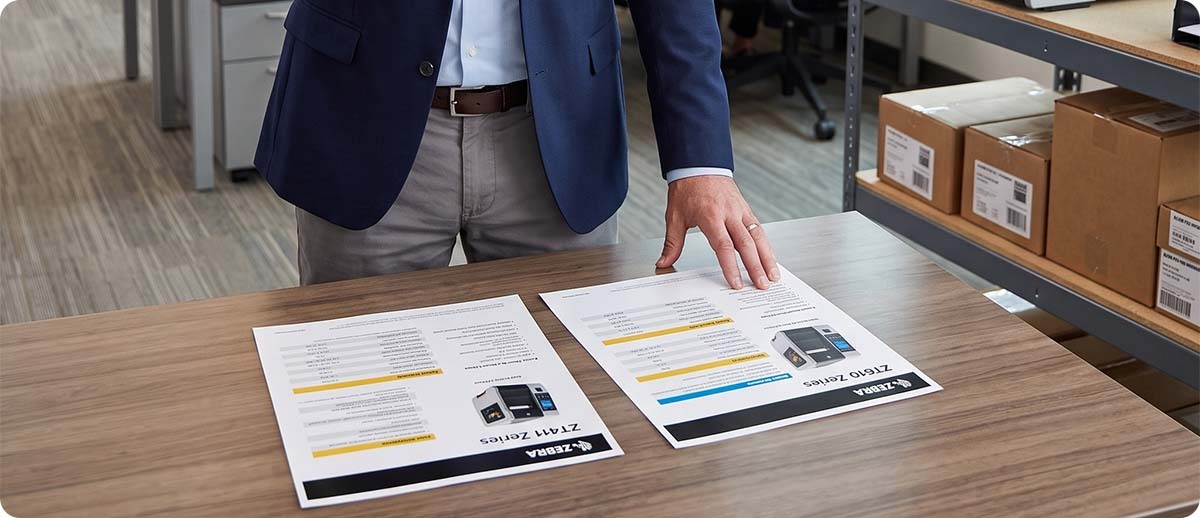
| Feature | ZT411 | ZT610 |
|---|---|---|
| Print width | 4 inches | 4 inches |
| Max print speed | 14 ips | 14 ips |
| Resolution options | 203 / 300 / 600 DPI | 203 / 300 / 600 DPI |
| Ethernet | 10/100 Mbps | Gigabit |
| Display | 4.3-inch color touch | 4.3-inch color touch |
| Micro-label precision | Standard industrial | Down to 3mm label size |
| RFID inlay spacing | Standard pitch | Down to 0.6-inch pitch |
| Adaptive RFID encoding | Not included | Included |
| Best for | High-volume standard and RFID labeling | Micro-labels, pharma, electronics, high-density RFID |
Who Should Get the ZT411
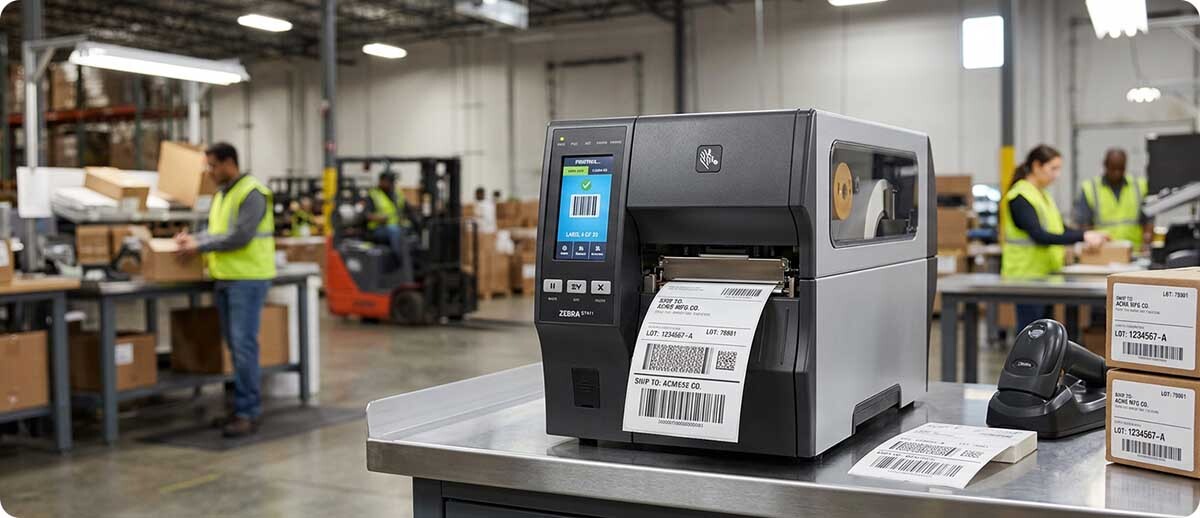
The ZT411 is the right call for the majority of industrial labeling operations. If you're running high-volume standard warehouse, distribution, or manufacturing labels at typical sizes, the ZT411 handles it at 14 ips with the same all-metal durability and color touch interface as the ZT610. If RFID is in your workflow but you're encoding standard inlays at normal spacing without specific density requirements, the ZT411's RFID configurations cover that too.
The ZT411 is also the right answer when budget is a real consideration and the specific advantages of the ZT610 don't map to anything in your actual workflow. Paying the ZT610 premium for Gigabit Ethernet you don't need and micro-label precision your labels don't require doesn't make sense.
Who Should Get the ZT610
The ZT610 earns its price in three specific situations. The first is pharmaceutical, electronics, or precision manufacturing labeling where labels get very small and print registration needs to be extremely accurate across a long production run. If your application is validated or certified at a specific quality grade, the ZT610's tighter mechanical tolerances are what Zebra specifically recommends for that category.
The second is high-density RFID encoding where inlay spacing matters for media cost or where you're working with a variety of inlay types that benefit from Adaptive Encoding Technology automatically handling the calibration. For a high-volume RFID labeling line where encoding performance and media efficiency are both priorities, the ZT610 is the better platform.
The third is when your IT infrastructure requires Gigabit Ethernet as a standard and connecting a 10/100 device to your network is not acceptable from a standardization standpoint. It's a less common driver, but it does come up in enterprise environments with strict infrastructure policies.
Shop ZT411 and ZT610 at Thermal Printer Supplies
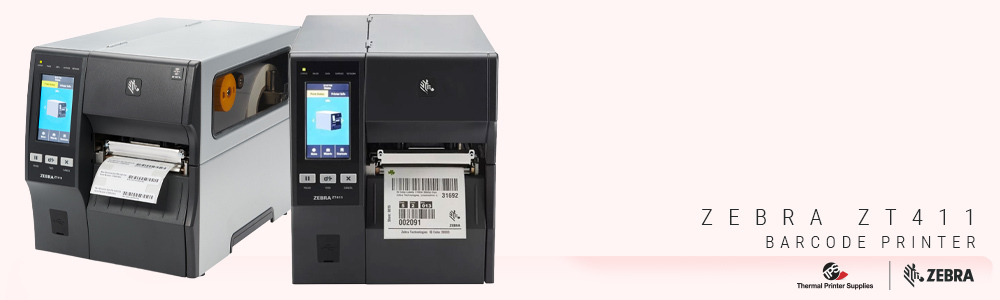
Zebra ZT411 Industrial Printer
14 ips | 203/300/600 DPI | 10/100 Ethernet | 4.3-inch color touch | RFID optional
ZT41142-T010000Z: TT, 203 DPI, standard, no RFID
ZT41142-T0100A0Z: TT, 203 DPI, RFID UHF encoder
ZT41143-T0100A0Z: TT, 300 DPI, RFID UHF encoder
ZT41142-T01E0A0Z: TT, 203 DPI, Wi-Fi, RFID, BT 5.3
Shop Zebra ZT411 →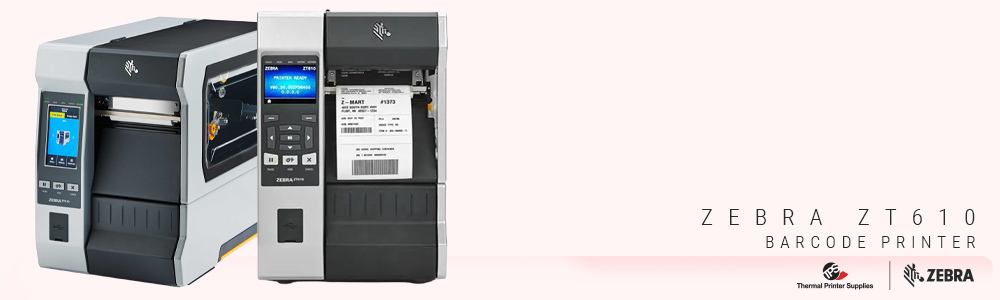
Zebra ZT610 Industrial Printer
14 ips | 203/300/600 DPI | Gigabit Ethernet | 4.3-inch color touch | High-density RFID
ZT61042-T0101A0Z: TT, 203 DPI, Gigabit Ethernet, RFID UHF
ZT61043-T0102A0Z: TT, 300 DPI, Gigabit Ethernet, RFID UHF
Shop Zebra ZT610 →
Questions We Get on This
We're replacing a ZT410. Do we go to the ZT411 or jump to the ZT610?
The ZT411 is the direct replacement for the ZT410 and the natural upgrade path for most ZT410 users. Unless your operation has outgrown what the ZT410 could do and specifically needs the micro-label precision or high-density RFID of the ZT610, the ZT411 is the right next step. It's faster than the ZT410, has a color touch display the ZT410 lacked, and costs less than the ZT610.
We print at 600 DPI on the ZT411 and it looks fine. Is there any reason to switch to the ZT610?
If 600 DPI on the ZT411 is producing acceptable output for your current labels, there's no compelling reason to switch. The ZT610 at 600 DPI will produce slightly better registration on very small labels, but if your labels aren't at the micro range where that difference matters, the output quality is going to look essentially the same. Unless you're having specific quality issues or your application is being validated to a print quality standard, stay with the ZT411.
Can the ZT411 and ZT610 share the same accessories and supplies?
Yes, mostly. Label media, ribbons, and printheads are model-specific between the ZT411 and ZT610 since they have different print mechanisms. However, the general Zebra accessory ecosystem (mounting options, peripheral devices) is broadly compatible. If you're running a mixed fleet of ZT411s and ZT610s, your ribbon and label supply chains will be separate, so that's worth factoring into your inventory planning.
If you want to confirm which configuration is right for your specific label size, volume, and RFID requirements before ordering, fill out the form below and we'll point you to the right printer and the right SKU before you spend a dollar on the wrong one.