
Zebra ZT411 vs. Honeywell PM45: Head-to-Head for Mid-Range Industrial Printing
Posted by Thermal Printer Supplies on Aug 27th 2026
By Thermal Printer Supplies | Industrial Printers | ZT411 vs. PM45 Head-to-Head
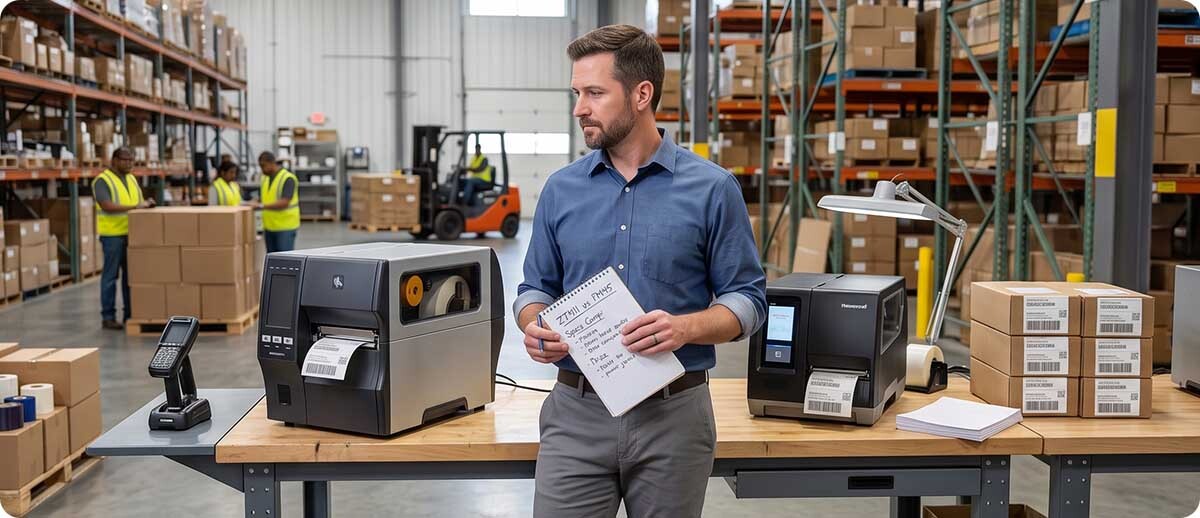
We covered the Zebra vs. Honeywell vs. TSC brand decision at a high level in a separate guide. This blog goes one level deeper and focuses specifically on the ZT411 vs. PM45 comparison at the printer level: the specs, the workflows where each one has a genuine advantage, the total cost picture, and the scenarios where we'd recommend one over the other without hesitation.
The Specs Side by Side
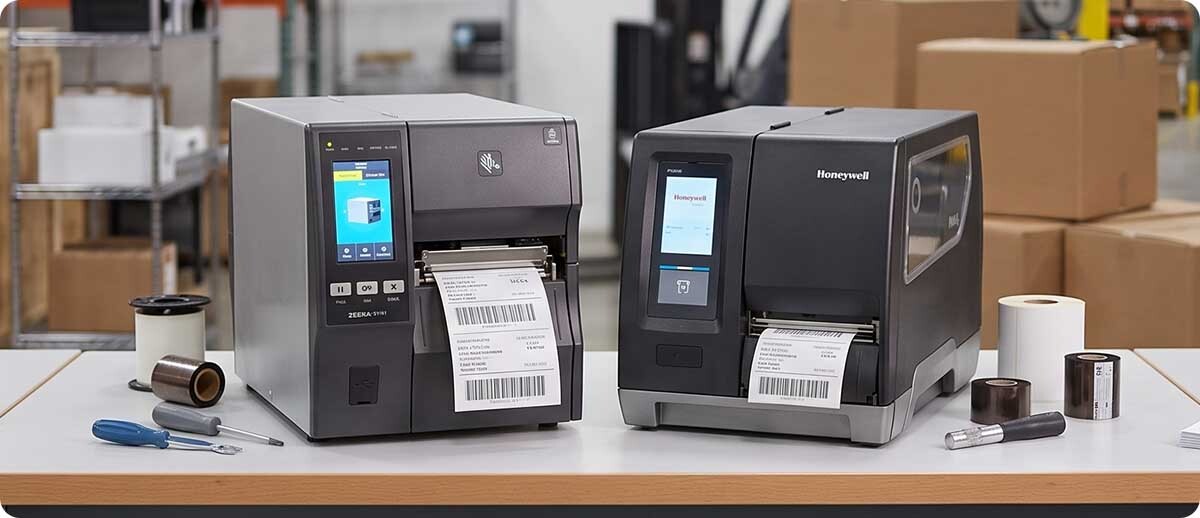
| Spec | Zebra ZT411 | Honeywell PM45 |
|---|---|---|
| Print width | 4 inches | 4 inches |
| Max print speed | 14 ips | 12 ips |
| DPI options | 203, 300, 600 | 203, 300 |
| Display | 4.3-inch color touch LCD | Color touch (select configs) |
| RFID option | Yes (UHF, field upgradeable) | No |
| Finishing options | Cutter, peeler, RFID, linerless | Cutter, peeler |
| Label languages | ZPL II native | DPL, Fingerprint, ZPL emulation |
| Management software | Zebra DNA (deepest ecosystem) | Honeywell Printer Edge |
| Frame | Metal, industrial | Metal, industrial |
| Price vs. comparable spec | Premium | Meaningful discount vs. ZT411 |
Where the ZT411 Has a Clear Advantage
RFID printing and encoding
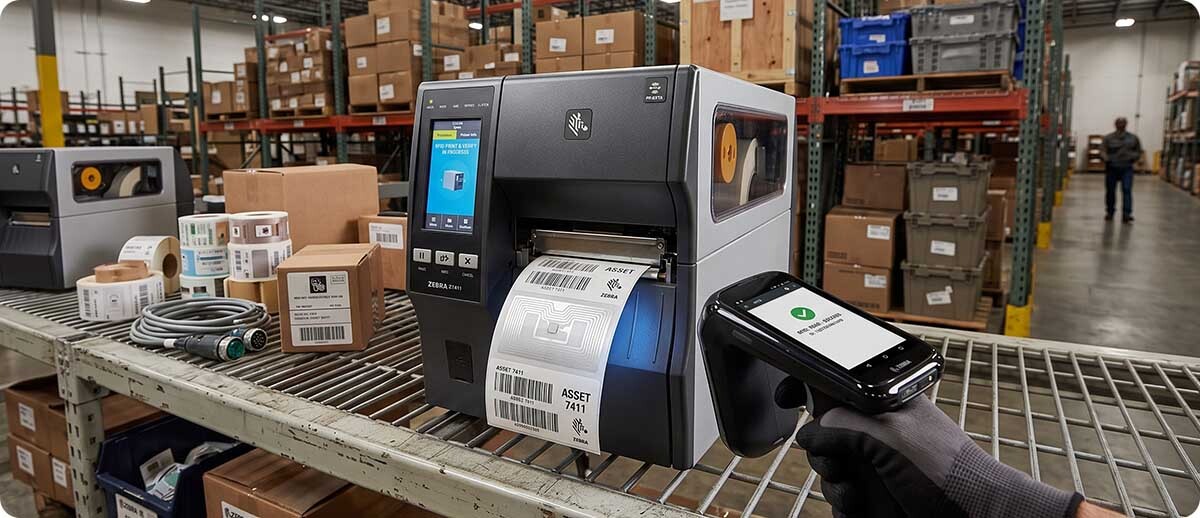
The ZT411 is available with a factory or field-installable UHF RFID encoder. The PM45 has no RFID option at all. If your operation needs to print and encode RFID labels at any point now or in the near future, the ZT411 is the only option between these two printers. For operations actively implementing RFID compliance labeling for retail partners, or evaluating RFID inventory management in the warehouse, this single capability difference ends the comparison immediately.
600 DPI for high-density and small label applications
The ZT411 is available in a 600 DPI configuration. The PM45 tops out at 300 DPI. For applications that require very small labels, dense 2D barcodes like Data Matrix or QR codes at high density, or human-readable text at very small point sizes, 600 DPI produces noticeably sharper output than 300 DPI can. Electronics labeling, pharmaceutical unit dose labeling, and compliance labels with small serialized 2D codes are all applications where 600 DPI on the ZT411 is a genuine operational advantage over 300 DPI on the PM45.
Print speed and throughput
The ZT411 reaches 14 ips versus the PM45's 12 ips. In continuous high-volume batch printing this is a meaningful throughput difference, about 17 percent more labels per unit time at maximum speed. For operations printing millions of labels per year where printer throughput directly affects line rate, that speed difference compounds into real operational value. For moderate volume operations where the printer is not running at maximum speed continuously, the practical difference is less significant.
Zebra DNA ecosystem depth
ZPL II is the most widely supported thermal printer language in enterprise software. If your WMS, ERP, or label management platform has a Zebra native integration, it works natively on the ZT411 without any emulation layer or compatibility testing. Zebra's Print DNA management tools for fleet-wide firmware updates, health monitoring, and security policy enforcement are deeper and more widely integrated with third-party enterprise platforms than Honeywell's Printer Edge. For large fleet deployments where centralized management is operationally important, Zebra DNA's ecosystem breadth is worth a portion of the price premium.
Where the PM45 Has a Clear Advantage
Price at comparable specifications
The PM45 is consistently priced at a meaningful discount to the ZT411 at comparable specifications. For operations deploying a large number of printers where the hardware cost per unit multiplies across the fleet, the savings on a PM45 vs. ZT411 deployment at scale is a real budget number worth evaluating. If the workflows don't require RFID, 600 DPI, or the full depth of Zebra DNA, the PM45 delivers very competitive industrial printing performance at a lower per-unit cost.
Migrating from Datamax or Intermec hardware
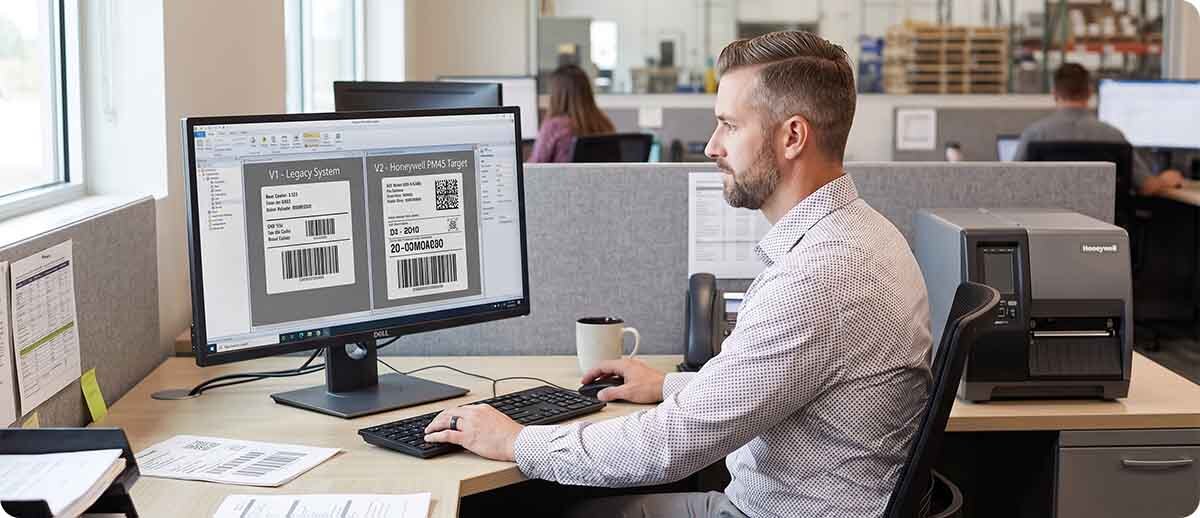
This is the PM45's single clearest operational advantage over the ZT411. The PM45 runs DPL (Datamax Programming Language) and Fingerprint (from Intermec) natively. If your current label templates were built for Datamax M-Class or H-Class printers in DPL, or for Intermec PM-series printers in Fingerprint, migrating to the PM45 means your existing templates work without rework. Migrating from the same hardware to a ZT411 means converting all existing label templates from DPL or Fingerprint to ZPL, which is significant work for a large template library and introduces the risk of print quality differences during the transition.
For operations upgrading from legacy Honeywell-family hardware, the PM45 migration path is faster, lower risk, and lower cost than moving to Zebra. For operations that have no legacy Datamax or Intermec templates in play, this advantage is irrelevant.
Honeywell fleet standardization
If your operation already runs Honeywell mobile computers, scanners, or other devices managed through Honeywell's Operational Intelligence platform, adding PM45 printers to the same management environment is simpler than introducing a separate Zebra DNA toolchain for the printers. For IT teams managing a standardized Honeywell fleet, the PM45 fits without adding a second management platform.
The TCO Picture
Total cost of ownership over a typical 5-year printer lifecycle includes hardware purchase price, printhead replacement cost and frequency, ribbon and label supply costs, and repair and service costs.
The ZT411 has a higher upfront price. Zebra OEM printhead prices tend to be higher than Honeywell OEM equivalents at comparable specifications. For high-volume operations replacing printheads regularly, that per-unit printhead cost difference compounds over a multi-year lifecycle. On the supply side, ribbon and label costs are essentially brand-neutral since both printers use standard thermal transfer ribbon and label stock that TPS carries for both.
Where the ZT411 TCO picture often recovers ground is in management overhead. A well-managed Zebra DNA fleet with centralized firmware updates, health monitoring, and proactive maintenance alerts tends to have lower unplanned downtime than a less-managed alternative. That downtime cost, when it materializes, frequently exceeds the hardware price difference on a per-incident basis. For operations that actively use Zebra DNA's management tools, the TCO argument for Zebra is stronger than the sticker price difference suggests. For operations that don't actively use fleet management tools on either platform, the PM45's lower upfront cost is a more straightforward TCO advantage.
The Decision Framework
| Your Situation | Right Printer |
|---|---|
| RFID printing or encoding required now or on roadmap | ZT411 |
| Small labels, dense 2D codes, or 600 DPI requirement | ZT411 |
| WMS or ERP has native Zebra ZPL integration | ZT411 |
| Large fleet, active use of centralized printer management tools | ZT411 |
| Migrating from Datamax or Intermec, existing DPL or Fingerprint templates | PM45 |
| Already running Honeywell mobile computers and scanners | PM45 |
| Budget-sensitive deployment, standard industrial labeling, no RFID or 600 DPI | PM45 |
| Label management software handles both brands, management overhead is minimal | PM45 (cost advantage) |
Shop ZT411 and PM45 at TPS
Zebra ZT411 Industrial Printer
4-inch | Up to 14 ips | 203, 300, or 600 DPI | 4.3-inch color touch | RFID option | Cutter, peeler, linerless options
ZT41142-T010000Z: 203 DPI, thermal transfer, ZPL/XML/EPL
ZT41143-T010000Z: 300 DPI, thermal transfer
ZT41143-T110000Z: 300 DPI, thermal transfer, cutter
Shop Zebra ZT411 →Honeywell PM45 Industrial Printer
4-inch | Up to 12 ips | 203 or 300 DPI | DPL, Fingerprint, ZPL emulation | Cutter and peeler options
PM45A1000000600: 203 DPI, DT/TT, USB/Serial/Ethernet
PM45A1010000600: 203 DPI, DT/TT, Ethernet
PM45C1000000600: 203 DPI, DT/TT, color touch display
Shop Honeywell PM45 →Quick Questions
Can the PM45 read our existing ZPL label templates?
The PM45 includes ZPL emulation that handles the majority of standard ZPL commands correctly. For most standard label formats the transition from a ZT411 to a PM45 is transparent from a template standpoint. Templates using Zebra-proprietary ZPL extensions or ZebraLink features may need minor adjustment. The recommendation before committing to a PM45 deployment from an existing ZPL template library is to run a test batch on a PM45 and validate the output against your quality standard before placing a fleet order.
We're replacing Datamax M-Class printers. Which one do we go to?
The PM45 is the lower-risk path if your existing label templates are in DPL. Native DPL support means your templates transfer without rework and your team's existing knowledge of the print language carries over. If you're open to a template migration and want to move to the Zebra ecosystem for the long term, the ZT411 is the right destination, but budget time and resources for the DPL-to-ZPL conversion. We can help scope that effort based on the size and complexity of your template library.
Is the ZT411 worth the premium for a standard mid-volume warehouse labeling operation with no RFID or special DPI requirements?
Honestly, for a lot of them, no. If the operation prints standard 4x6 shipping or inventory labels in moderate volume, doesn't need RFID, doesn't need 600 DPI, and doesn't have a large IT team actively using Zebra DNA management tools, the PM45 covers the job well at a lower cost. The ZT411 premium pays off when specific capabilities like RFID, 600 DPI, or the depth of Zebra DNA are operationally valuable. When they aren't, the PM45 is solid industrial hardware at a better price. We'd rather tell you that upfront than let you pay for capabilities you won't use.
If you want a straight recommendation on which printer fits your specific volume, label format, existing infrastructure, and budget before you place an order, fill out the form below. We sell both and we'll give you an honest answer.