
Zebra vs. Honeywell vs. TSC: How to Choose Between the Three Biggest Thermal Printer Brands
Posted by Thermal Printer Supplies on Jun 1st 2026
By Thermal Printer Supplies | Thermal Printer Brands | Zebra vs. Honeywell vs. TSC Buyer's Guide
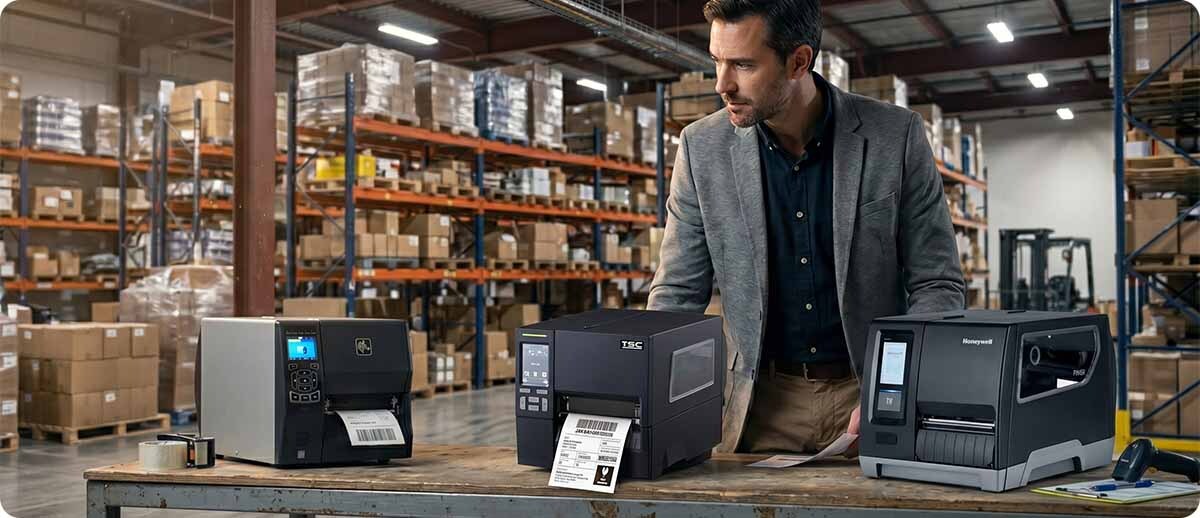
Thermal Printer Supplies sells printers from all three brands. We source parts, printheads, and supplies for all three. We have no financial incentive to push one brand over another — the right answer for a given operation is simply the right answer, and our job is to help you find it. That position gives us a perspective on the Zebra vs. Honeywell vs. TSC question that a single-brand reseller cannot offer.
The brand decision matters more than most buyers realize at the time of purchase. It determines which management software you use to update firmware and monitor printer health across your fleet. It determines which parts are available when a component fails five years from now. It determines whether your IT team has a single software platform for all printers or multiple platforms for different brands. It determines whether a migration to a newer printer model in the future requires retraining, new software, and new accessories, or whether it is a straightforward upgrade within a familiar ecosystem. A printer purchase is not just a hardware decision. It is an ecosystem commitment.
Zebra Technologies: The Ecosystem Standard
What makes Zebra the most widely deployed thermal printer brand in North America?
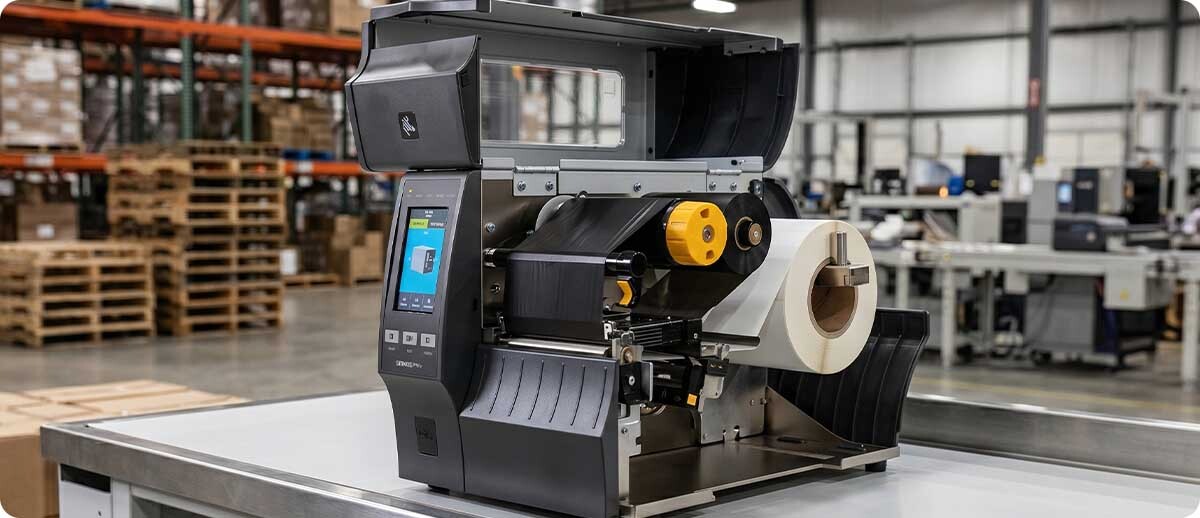
Zebra's market position is built on three things: the depth of the Zebra DNA software ecosystem, the breadth of the accessory and parts infrastructure, and the scale of the North American service and support network. Each of these creates switching costs that make Zebra the default choice for large enterprise deployments where standardization and manageability matter as much as hardware performance.
Zebra DNA is the software platform that makes Zebra's hardware more than just a printer. It includes Print DNA tools for remote fleet management — StageNow for device staging, VisibilityIQ for centralized health and utilization monitoring, PrintSecure for security policy enforcement, and Zebra's firmware update infrastructure that keeps printers current across the full lifecycle. An IT team managing 200 Zebra printers across multiple facilities can update firmware, push configuration changes, monitor printer status, and respond to alerts from a single dashboard. That level of management capability does not require a third-party solution. It is built into the Zebra platform.
ZPL (Zebra Programming Language) is the most widely supported thermal printer language in enterprise software. Every major WMS, ERP, label management platform, and barcode verification system speaks ZPL. Operations that build their label templates in ZPL are not locked to Zebra hardware — both Honeywell and TSC offer ZPL emulation — but ZPL native support on Zebra hardware means no translation layer, no emulation quirks, and no compatibility testing when changing label formats or updating software.
The accessory ecosystem is genuinely wider than either Honeywell or TSC. Mounting solutions, mobile cradles, healthcare configurations, specialized media handling options (rewind, cutter, linerless, peel-and-present), and the full range of ZD, ZT, ZQ, ZE, and ZC product families create a hardware catalog that covers more application scenarios from a single vendor than any alternative.
What are Zebra's weaknesses compared to Honeywell and TSC?
Price. Zebra consistently prices at a premium relative to Honeywell and TSC at comparable specification levels. A ZT411 and a Honeywell PM45 cover very similar industrial applications at materially different price points. For operations that do not need the depth of Zebra DNA or for which management software will be handled by a third-party platform like Loftware or BarTender anyway, the Zebra premium delivers less incremental value.
Zebra does not offer native PostScript or PDF printing. Complex label designs that require direct PDF rendering or PostScript support must be processed through software before reaching the printer. TSC's T8000 series handles this natively, which matters for specific enterprise applications where label content originates in PDF format.
Zebra does not currently offer an 8-inch wide format printer in its standard lineup. The 220Xi4 was discontinued without a replacement. Operations that require labels wider than 6.6 inches have no current Zebra option and must look at TSC's T8000 series instead.
Zebra Printers at Thermal Printer Supplies
Desktop: ZD411, ZD421, ZD611, ZD621 — full range of DT, TT, cartridge, and linerless configurations
Industrial: ZT231, ZT411, ZT421, ZT510, ZT610, ZT620, ZT111 linerless
Mobile: ZQ521, ZQ620, ZQ630 Plus, ZQ630 Plus RFID and linerless configurations
Print engines: ZE511, ZE521
Shop Zebra Printers →Honeywell: Industrial Strength, Engineering Heritage
What is Honeywell's thermal printer background and how does it affect the hardware?
Honeywell's thermal printer portfolio is the product of multiple strategic acquisitions over the past two decades. Honeywell acquired Intermec in 2013, adding the Intermec PM-series industrial printers and the Fingerprint programming language. It then acquired Datamax-O'Neil in 2015, which brought the Datamax M-Class and H-Class industrial printers into the Honeywell lineup. The current Honeywell PM45 and PM65 industrial printers draw directly from this Intermec and Datamax industrial engineering heritage — they are physically substantial, mechanically robust platforms built for sustained high-volume operation in demanding environments.
The practical result of this heritage is that Honeywell's industrial printers have a reputation for durability and print quality that is competitive with Zebra's ZT-series at the high end. The PM65 in particular, positioned against the Zebra ZT610/ZT620, is widely regarded as a premium industrial platform with strong print registration and mechanical precision. The PX940 with its optional ODV-2D inline barcode verifier serves the same compliance-critical applications as the Zebra ZT610 with verifier.
What is Honeywell Printer Edge and how does it compare to Zebra DNA?
Honeywell Printer Edge is the management software platform for Honeywell's current printer lineup. It provides centralized configuration, firmware update management, remote diagnostics, and fleet monitoring across Honeywell printer fleets. Honeywell also offers Operational Intelligence, a broader IoT platform that can incorporate printer data alongside other operational data from Honeywell's mobile computer and scanning product lines.
In practice, Printer Edge is a capable fleet management platform for operations standardized on Honeywell hardware. It does not have the same depth of integration with third-party WMS and MDM platforms that Zebra DNA has developed over a longer period. Operations evaluating a large Honeywell deployment should verify that their specific label management software, WMS, and MDM platform have documented Honeywell Printer Edge integration before standardizing on the platform.
Honeywell's label languages include DPL (Datamax Programming Language), Fingerprint (from Intermec), IPL, and ZPL emulation. For operations migrating from legacy Datamax or Intermec hardware, Honeywell's native language support eliminates the need to rework existing label templates that were built in DPL or Fingerprint. This is a genuine advantage for operations upgrading from legacy Honeywell-family hardware that would otherwise face significant template migration work to move to Zebra.
Where does Honeywell have a clear advantage over Zebra and TSC?
Legacy migration. Operations running Datamax M-Class, H-Class, or Intermec PM-series printers can migrate to current Honeywell PM45 or PM65 hardware with native label language compatibility and familiar media handling. The same label templates, the same ribbon configurations, and in many cases the same media. For a large fleet migration from end-of-life Datamax or Intermec hardware, this compatibility significantly reduces migration cost and risk compared to moving to Zebra or TSC.
RFID breadth. Honeywell's RFID-capable printer configurations span a wider range than most buyers realize. The PX940 in particular supports a broad range of RFID inlay formats and encoding distances that make it a strong option for compliance labeling applications where specific RFID inlay performance is required.
Price positioning. Honeywell's PC45 and PM45 are consistently priced at a meaningful discount to the comparable Zebra ZD421 and ZT411 while delivering very competitive specifications. For operations that are evaluating Honeywell and Zebra at comparable specifications and do not require the full Zebra DNA suite, Honeywell regularly delivers better hardware value per dollar at the same tier.
Honeywell Printers at Thermal Printer Supplies
Desktop: PC43, PC45d, PC45t — standard and healthcare configurations
Industrial: PM45, PM65, PX940 — including ODV-2D verifier configurations on PX940
Mobile: RP4F linerless mobile printer
Shop Honeywell Printers →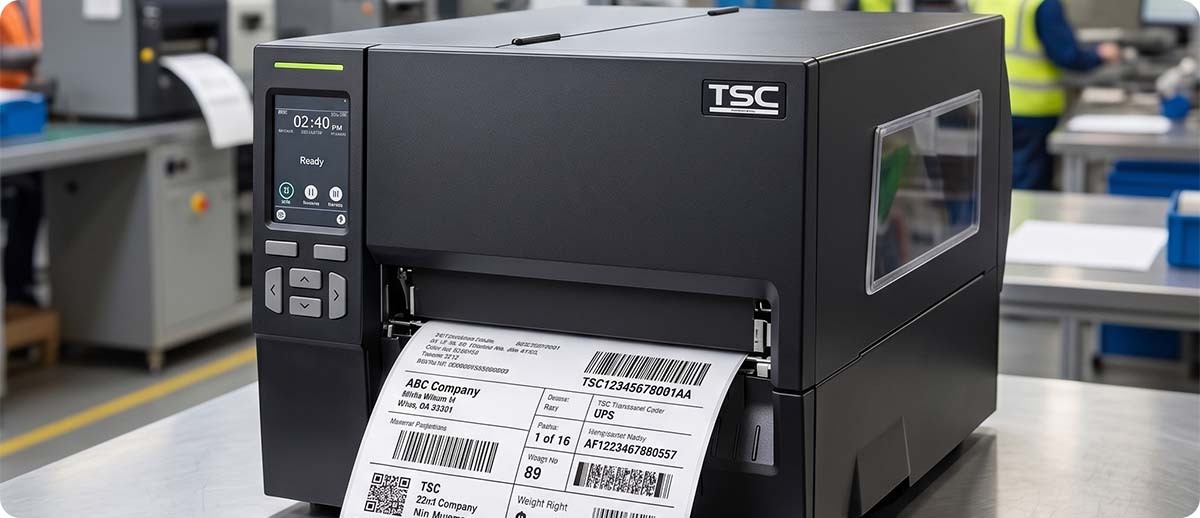
TSC Printronix: The Value Alternative With Enterprise Depth
Who is TSC Printronix and why is it less well-known than Zebra and Honeywell?
TSC Auto ID and Printronix reached agreement in November 2015, with the transaction closing in early 2016, combining TSC's high-volume label printer manufacturing capability with Printronix's enterprise industrial platform expertise and its established position in mission-critical compliance labeling. The combined entity — TSC Printronix Auto ID — produces printers under the TSC brand for value and mid-range applications and under the Printronix Auto ID brand for enterprise industrial applications, though both product lines are increasingly consolidated.
TSC is less well-known in North America than Zebra primarily because Zebra has invested more heavily in brand building, enterprise sales force development, and the ISV partnership ecosystem in North America over the past 20 years. TSC has historically been stronger in Asia-Pacific markets and in OEM relationships where the printer ships under another brand's name. That does not reflect on TSC's hardware quality — the TSC T8000 series is legitimately competitive with the Zebra ZT600 and Honeywell PX940 at the premium industrial tier — but it does reflect a smaller North American service and support network than either Zebra or Honeywell maintains.
What unique capabilities does TSC have that Zebra and Honeywell do not?
Three specific capabilities put TSC in a category of its own for certain applications.
The first is 8-inch wide format printing. The TSC T8000 series prints up to 8.5 inches wide, making it the only current production enterprise-grade option for labels that exceed Zebra's maximum 6.6-inch print width or Honeywell's maximum 6.6-inch print width. Operations printing full-face pallet labels, wide-format GHS chemical drum labels, and wide-format shipping documentation have no Zebra or Honeywell option at the 8-inch width. TSC is the only path forward.
The second is native PostScript and PDF printing. TSC's T8000 series accepts PDF and PostScript files directly, printing them without requiring the host system to rasterize the file before sending it to the printer. This is a meaningful capability for operations whose label content originates in PDF format from an ERP or document management system, where sending the native PDF eliminates a processing step and reduces the risk of rendering errors.
The third is the widest print language emulation library in the market. TSC printers support ZPL, PGL, VGL, IPL, DPL, TGL, STGL, and Fingerprint emulation alongside PostScript and PDF. An operation with a mixed fleet of legacy printers spanning multiple brands and label languages can often consolidate onto TSC hardware without reworking any existing label templates — the TSC printer speaks the language of whatever printer it is replacing.
What are TSC's limitations compared to Zebra and Honeywell?
Service network. TSC's North American service and repair network is smaller than Zebra's or Honeywell's. For operations that rely on rapid depot repair or on-site service response, verifying the TSC service availability in their specific geography before committing to a large TSC deployment is important. TPS carries TSC replacement parts including printheads and platen rollers for depot-level repairs that can be performed without manufacturer depot involvement, which partially addresses this concern for common failure modes.
Fleet management software depth. TSC's management platform is capable but does not have the integration breadth of Zebra DNA or the depth of integrations with North American WMS and MDM platforms that Zebra has built over decades of enterprise sales. Operations that need printer management tightly integrated with specific third-party platforms should verify TSC's compatibility before standardizing on the brand.
Brand recognition in enterprise IT. In environments where IT standardization and vendor approval processes are significant, Zebra's brand recognition often simplifies the procurement process in ways that TSC's lower brand awareness does not. This is not a hardware quality issue but it is a real operational consideration for large enterprise deployments.
TSC Printers at Thermal Printer Supplies
Desktop: DA210, DA310 — value direct thermal desktop
Industrial: T600 series, T8000 series (T8204, T8304, T8206, T8306, T8208, T8308)
Mobile: ALPHA-40L linerless mobile printer
Shop TSC Printers →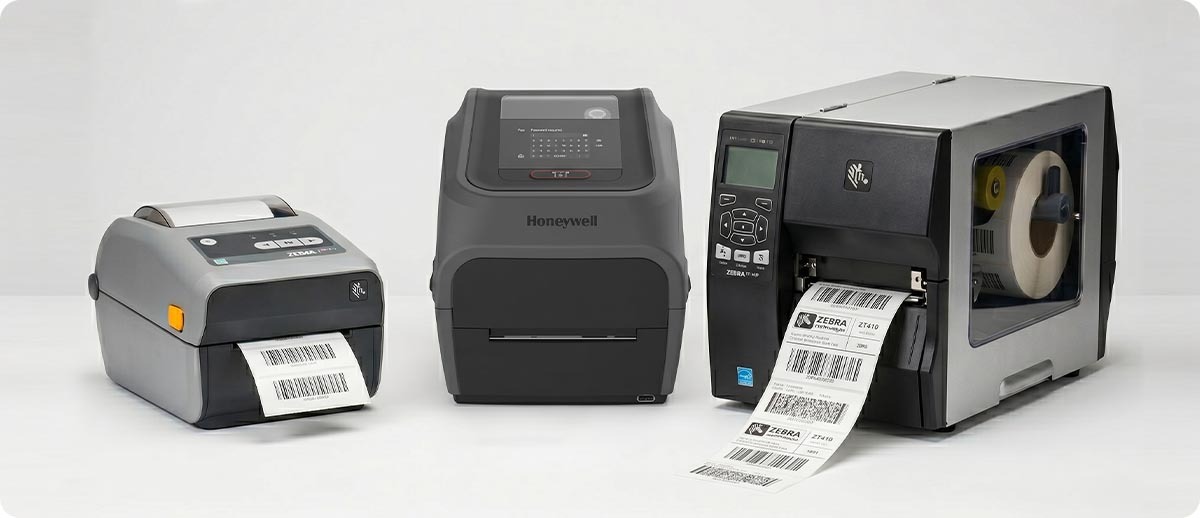
The Head-to-Head Comparison Across Six Decision Factors
| Decision Factor | Zebra | Honeywell | TSC |
|---|---|---|---|
| Fleet management software | Zebra DNA — deepest integration ecosystem | Printer Edge — capable, narrower integrations | TSC console — functional, fewer third-party integrations |
| Price vs. comparable spec | Premium — highest per-unit cost | Mid — meaningful discount vs Zebra | Value — lowest per-unit cost at comparable spec |
| Label language support | Native ZPL — industry standard | DPL, Fingerprint native; ZPL emulation | Widest emulation: ZPL, PGL, VGL, IPL, DPL, TGL, PostScript, PDF |
| North American service network | Largest — most authorized service providers | Strong — established from Datamax/Intermec network | Smaller — verify availability for your region |
| Max print width | 6.6 inches (ZT620) | 6.6 inches (PM65) | 8.5 inches (T8208/T8308) |
| Legacy migration from existing fleet | Best if migrating from prior Zebra generation | Best if migrating from Datamax, Intermec, or Honeywell | Best if migrating from mixed multi-brand fleet |
| Accessory and parts ecosystem depth | Deepest — widest range of mounts, cradles, options | Strong for current platform | Adequate — narrower than Zebra or Honeywell |
Which Brand Is Right for Your Operation?
When should you choose Zebra?
Choose Zebra when fleet management at scale is a priority. If your operation runs 50 or more printers and your IT team needs centralized firmware management, health monitoring, and security policy enforcement across all of them, Zebra DNA's depth is worth the premium. Choose Zebra when your existing WMS, ERP, or label management software has deep Zebra certification — most major platforms have Zebra as a first-class supported brand. Choose Zebra when your label templates are in ZPL and you want native support without emulation. Choose Zebra when your operation has existing Zebra infrastructure and you are upgrading within the same ecosystem. Choose Zebra for healthcare applications where the HC-series with disinfectant-ready plastics and LifeGuard Android security is a requirement.
When should you choose Honeywell?
Choose Honeywell when you are migrating from a Datamax or Intermec fleet and want to preserve existing DPL or Fingerprint label templates without rework. Choose Honeywell when you are evaluating industrial printers at the PM45 or PM65 tier and Honeywell's price point relative to the Zebra equivalent is a meaningful budget consideration. Choose Honeywell when you are standardizing a mobile computer and printer fleet together and Honeywell's Operational Intelligence platform covering both device categories in a single management environment has value. Choose Honeywell when the PX940 with its ODV-2D inline verifier and broad RFID configuration range is the best fit for a specific compliance labeling application.
When should you choose TSC?
Choose TSC when your labels are wider than 6.6 inches and the T8000 series is the only viable option. Choose TSC when label content originates in PDF or PostScript format and native printing without rasterization is operationally valuable. Choose TSC when you are migrating from a multi-brand legacy fleet with mixed label languages and TSC's broad emulation library eliminates template rework across all legacy formats simultaneously. Choose TSC when price is a primary decision driver and the T-series industrial hardware's specifications are competitive with Zebra and Honeywell alternatives at a meaningfully lower cost. Choose TSC when the ODV-2D inline verification option on the T8000 series is the right fit for a compliance labeling application and the lower hardware cost justifies the narrower service network.

Frequently Asked Questions: Zebra vs. Honeywell vs. TSC
Can I mix Zebra and Honeywell printers in the same facility?
Yes, but you will be managing two separate printer ecosystems. Zebra DNA and Honeywell Printer Edge are separate platforms. Firmware updates, configuration management, and health monitoring for Zebra printers go through Zebra's tools and the same tasks for Honeywell printers go through Honeywell's tools. If your label management software (Loftware, BarTender, NiceLabel) supports both brands as print targets — and most major platforms do — the label printing workflow can be standardized. But the device management workflow will be split. Many operations run mixed fleets successfully. The question is whether the IT overhead of managing two ecosystems is acceptable relative to whatever benefit drove the brand mix decision.
Will a TSC printer run my existing Zebra ZPL label templates?
In most cases, yes. TSC's ZPL emulation is one of the most developed in the market and handles the majority of ZPL commands and formatting instructions correctly. The practical recommendation before committing to a TSC deployment is to run your existing ZPL templates on a TSC test unit and validate the output against your quality standard. Templates using standard ZPL commands transfer cleanly in the large majority of cases. Templates using Zebra-proprietary extensions or ZebraLink-specific features may need minor adjustment. TPS can advise on known ZPL emulation limitations for specific TSC models.
Is Honeywell going to continue supporting thermal printers long-term?
Yes. Thermal printing is a core product category for Honeywell Safety and Productivity Solutions. Honeywell continues to invest in current-generation platforms including the PC45 and PM45/PM65 with ongoing firmware development, new connectivity features, and the Printer Edge management platform. The concern about Honeywell's thermal printer commitment is sometimes raised because Honeywell is a large diversified industrial conglomerate rather than a dedicated barcode company. In practice, the barcode and mobile computing division is a meaningful revenue contributor and Honeywell has maintained and invested in the product lines it acquired from Datamax and Intermec. There are no signals of planned discontinuation.
Does it matter which brand I choose if I am using a third-party label management platform like Loftware or BarTender?
It matters less for the label printing workflow itself, because Loftware, BarTender, and NiceLabel all support Zebra, Honeywell, and TSC as print targets. The label design, the database connections, and the print job routing are all handled by the label management platform independent of the printer brand. Where brand still matters is device management (firmware updates, configuration, monitoring), parts availability, service network access, and the specific hardware capabilities of each brand's lineup. Third-party label management software makes the printing workflow brand-agnostic. It does not make the full operational picture brand-agnostic.
We sell and support all three brands because all three are the right answer in different situations. If you want to talk through which brand fits your specific operation — your existing infrastructure, your label requirements, your IT management capacity, and your service network needs — our team can work through it without a brand preference pushing the conversation in any direction. Fill out the form below and let us help you make the right brand decision before the hardware arrives.