
The "Clean Room" Challenge: Labeling for Life Sciences
Posted by Thermal Printer Supplies on Jan 19th 2026
In the competitive landscape of the Barcoding and Auto-ID Industry, the focus is often on print speed, scan rates, and hardware durability. However, for those operating in the Life Sciences and Pharmaceutical Sectors, the most critical metric isn't just how fast a label prints, but how many microscopic particles it leaves behind.
At ThermalPrinterSupplies.com, we understand that the barcode label is a critical component of the manufacturing cleanroom—and if it isn’t engineered correctly, it becomes a liability. In an ISO Class 100 (ISO 5) or Class 1000 (ISO 6) environment, "standard" thermal transfer supplies are a primary source of contamination. Maintaining ISO compliance requires a strategic shift from generic consumables to precision-engineered, non-shedding, and low-outgassing materials that protect the integrity of your sterile suite.
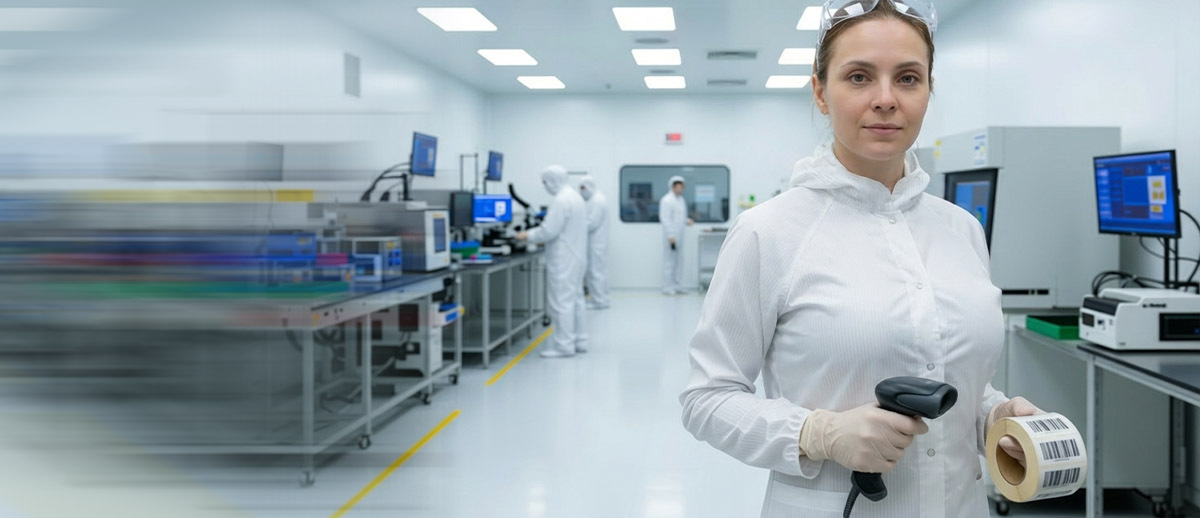
The "Clean Room" Challenge: Labeling for Life Sciences
While most facility managers focus on gowning and HEPA filtration, a silent culprit often goes overlooked: the humble thermal label.
Standard paper labels and traditional liners are "shedders." They release microscopic cellulose fibers and chemical vapors that can jeopardize a sterile batch or trigger a cleanroom protocol breach. Here is how specialized thermal printer supplies are solving this niche challenge.
1. Particulate Shedding (The "Snow" Effect)
Standard paper labels and cardboard cores are made of wood pulp. As they move through a thermal printer, the friction of the printhead and the tension of the peel-off process release thousands of tiny fibers into the air. In a Class 100 environment, where the limit is just 3,520 particles per cubic meter, a single roll of standard labels can "snow" enough particles to shut down a production line.
2. Chemical Outgassing
Many adhesives and topcoats contain volatile organic compounds (VOCs).3 In the pressurized, temperature-controlled air of a life science lab, these chemicals can "outgas," settling on sensitive medical devices or contaminating pharmaceutical reagents.
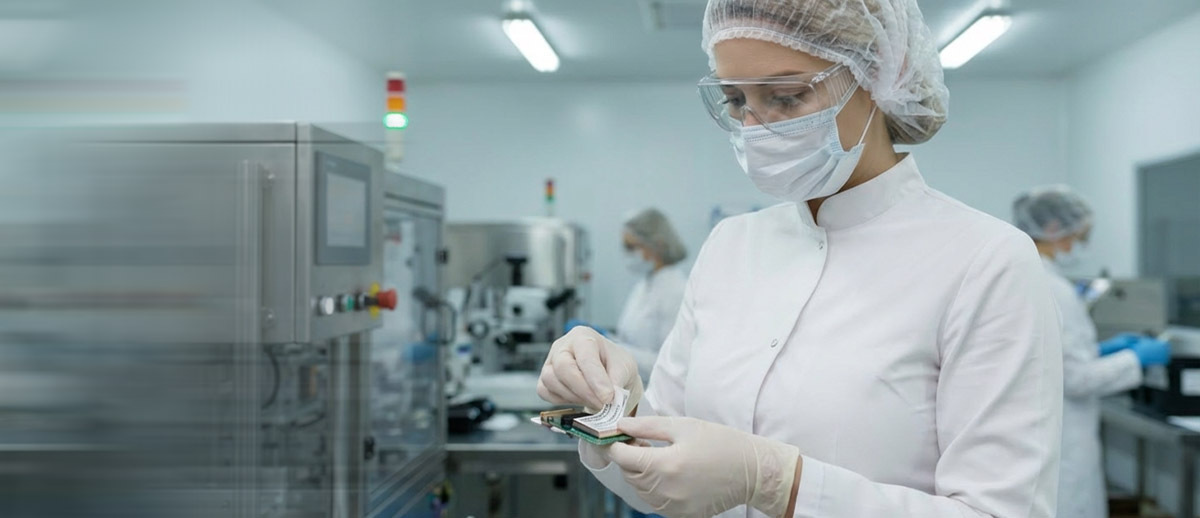
Engineering the Solution: 3rd Party Precision & Custom Manufacturing
At Thermal Printer Supplies.com, we specialize in bridging the gap between high-end material science and custom labeling requirements. We utilize world-class materials from industry leaders but convert them into custom-manufactured barcode labels tailored to your specific ISO environment.
By sourcing premium facestocks and adhesives, we provide high-performance alternatives that meet or exceed OEM standards:
- 3M™ High-Performance Solutions: We offer custom-converted labels utilizing 3M™ 7000-series medical-grade materials. For example, our labels featuring 3M™ 7817 Gloss Polyester utilize Adhesive 320, providing industry-leading "flagging" resistance on small-diameter vials and test tubes while maintaining the low-outgassing profile necessary for pharmaceutical packaging.
- Avery Dennison® Medical-Grade Media: Our team manufactures custom solutions using Avery Dennison® film facestocks and "Low-Migration" adhesives. These are specifically designed to comply with ISO 13485 standards, making them the gold standard for blood bag labeling and secondary sterilization packaging where chemical purity is non-negotiable.
- Specialized Liners & Cores: To ensure full compliance, our custom runs replace standard paper liners with polyester (PET) or BOPP synthetic liners. These film-based backings do not tear or shed fibers. Furthermore, we wind all cleanroom orders on 100% plastic cores (polyethylene or polypropylene) that can be wiped down with 70% IPA before entering the sterile zone.
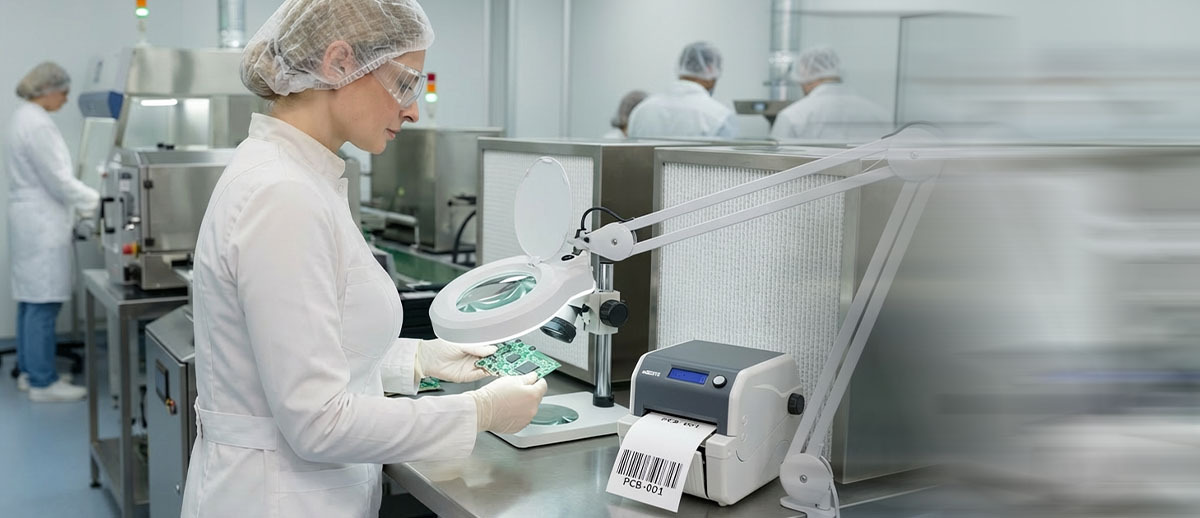
Application-Specific Durability
In the life sciences, a label must survive more than just the cleanroom. It must remain legible through the entire product lifecycle. Our custom-manufactured thermal transfer materials are tested for:
- Cryogenic Storage: Maintaining adhesion at -196°C in liquid nitrogen.
- Solvent Resistance: Withstanding frequent wipedowns with bleach, hydrogen peroxide, and Isopropyl Alcohol.
- UDI Compliance: Ensuring high-contrast, high-resolution barcoding for Unique Device Identification that remains scannable even after sterilization.
Labeling in an ISO-classified environment is not a place for "general purpose" supplies. By switching to non-shedding thermal labels and low-outgassing materials, you protect your yield, your compliance standing, and—most importantly—the patient safety that depends on your sterile process.
At Thermal Printer Supplies.com, we understand that in the life sciences, there is zero room for error. A single microscopic fiber or a trace amount of chemical outgassing can compromise months of research or a high-value production batch. Whether you need custom-converted 3M™ or Avery Dennison® materials, or a specialized synthetic solution engineered for the most rigorous ISO Class 100/1000 environments, we have the expertise to deliver.
From non-shedding liners and plastic cores to low-outgassing adhesives, our thermal labels are built to meet the most demanding industry standards while ensuring your barcodes remain crisp and compliant. Don't let your labeling be the weak link in your sterile environment. Trust Thermal Printer Supplies to provide the cleanroom-ready media you need to get the job done right.
Talk to an Expert