
One Ribbon Swap Can Void Your Automotive UL 969 Certification. Here's Why.
Posted by Thermal Printer Supplies on Apr 7th 2026
By Thermal Printer Supplies | Automotive Labeling | Compliance Guide
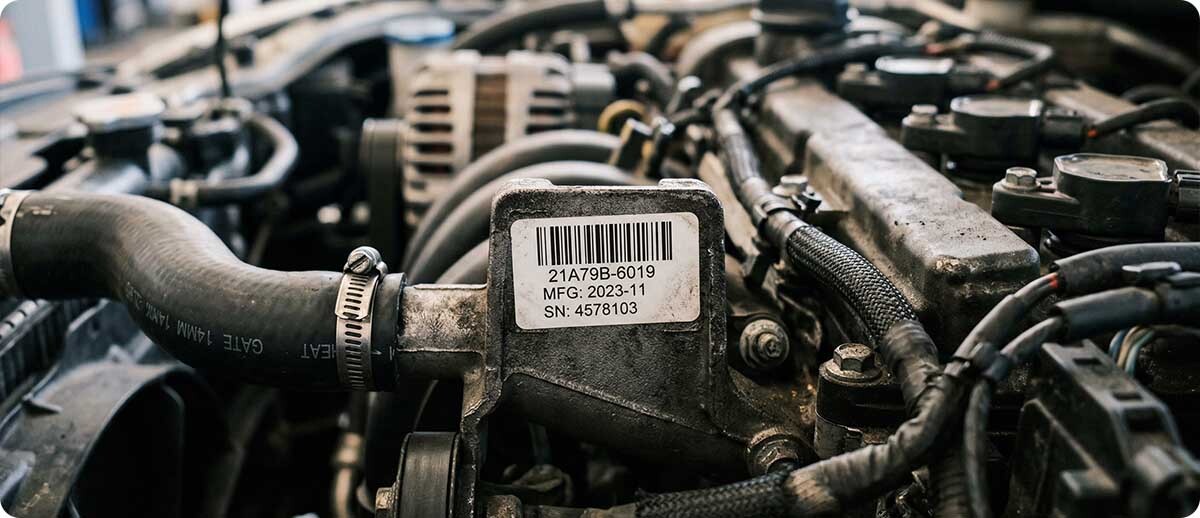
Walk through any automotive assembly plant and you'll see thousands of labels — on wire harnesses, under hoods, on battery modules, inside door panels, on ECUs and sensors and fluid reservoirs. Every one of those labels that appears on a UL Listed or Recognized product carries a responsibility: it must stay legible and remain adhered for the life of the vehicle. Not just the first season. Not just the first inspection. For the full service life of the vehicle — which in the automotive industry means a minimum of 10 to 15 years of exposure to heat cycling, humidity, oils, solvents, and abrasion.
UL 969, the Standard for Marking and Labeling Systems, exists to certify that a label can actually do this job. But there's a widely misunderstood aspect of UL 969 that creates real compliance risk in automotive and electrical manufacturing operations: the standard certifies a system, not a component.
When you purchase a label material recognized under UL 969's PGJI2 category — the category covering materials intended for additional printing by the end-use manufacturer — that recognition specifies not just the label facestock and adhesive, but the exact ribbon ink formulation that was tested with it. The label is certified. The ribbon is certified. Their combination is certified. Change any one element, and the certified system no longer exists, regardless of whether the individual component is itself UL recognized.
This guide explains exactly why the system certification concept exists, what happens chemically when the pairing is changed, how to verify your system is intact, and which label-plus-ribbon combinations from Brady and Zebra are confirmed in stock at Thermal Printer Supplies.
Understanding UL 969 PGJI2: What "Printing Materials" Actually Means
UL 969 organizes label certification into several category code numbers. For automotive and electrical manufacturing operations that print their own labels on-site using thermal transfer printers, the relevant category is PGJI2 — Marking and Labeling Systems — Printing Materials.
PGJI2 covers printed labels and unprinted stocks that have been evaluated to receive additional printing by end-use product manufacturers — which is precisely what happens when an automotive supplier runs blank label rolls through a thermal transfer printer on the production line. The PGJI2 recognition includes:
- The label facestock (the substrate — polyester, polyimide, vinyl, etc.)
- The adhesive formulation (permanent acrylic, rubber-based, high-tack, etc.)
- The printing ink or ribbon formulation that the facestock has been specifically evaluated with
- The printing method (thermal transfer, laser, hot stamp)
This is not a general material approval. It is a system approval. The UL recognition documents — accessible via the UL Product iQ database — list specific ribbon series alongside specific label materials. A Brady B-422 polyester label recognized with Brady R6000 Halogen Free Resin ribbon is a different evaluated system than Brady B-422 with a generic resin ribbon, even if that generic ribbon is itself "UL recognized" on a different label material.
UL's own program documentation states this directly: additional printing inks for which labels have been found compatible are specified in the recognition, and only those inks are considered acceptable. There is no ambiguity. The ribbon is part of the certification.
Why Ribbon Chemistry Makes the System Non-Interchangeable
To understand why the ribbon pairing is so critical, it helps to understand what actually happens during thermal transfer printing at a chemical level — and what the UL 969 permanence tests are actually measuring.
How Thermal Transfer Ribbon Bonds to a Label
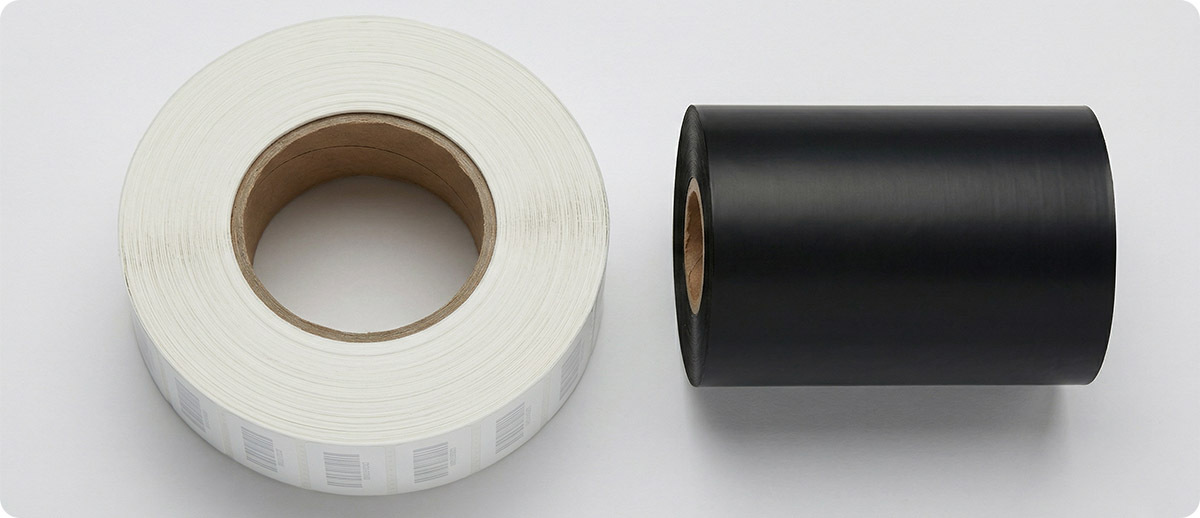
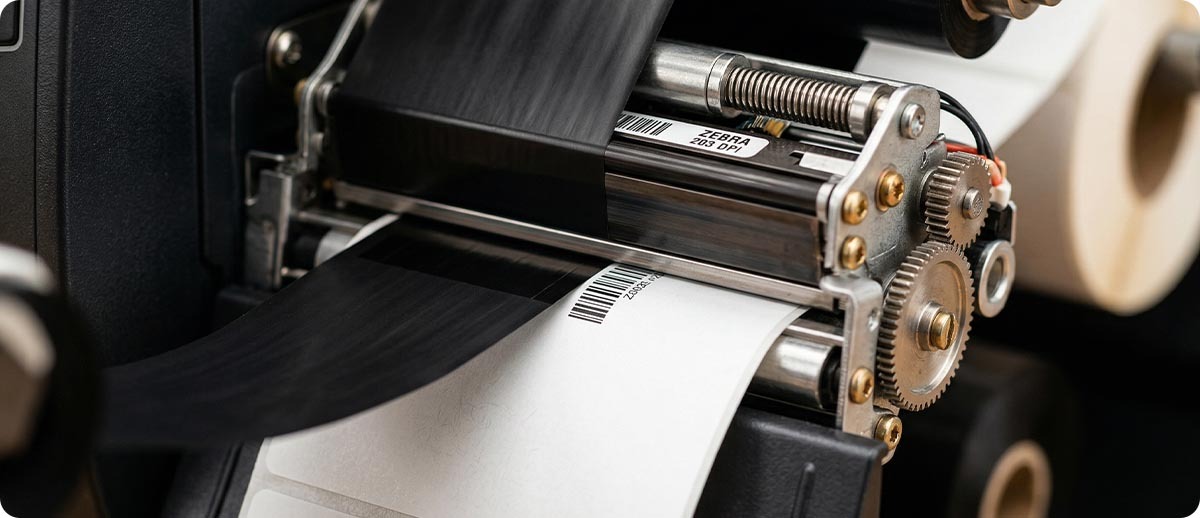
Thermal transfer ribbon consists of a polyester film carrier coated with an ink layer — a mixture of colorants, wax or resin binders, and release agents. When the printhead applies heat to the ribbon, the ink melts and transfers to the label facestock. The bond quality between that ink layer and the facestock is not a simple mechanical adhesion — it involves chemical compatibility between the ink binders and the facestock coating chemistry.
A wax ribbon produces a soft, low-melting-point ink layer that bonds adequately to paper but flows and smears when exposed to heat, oil, or solvents — the exact conditions found under a vehicle hood or on a wire harness in an engine bay. A wax-resin ribbon improves on this but still has limits. A resin ribbon produces a high-melting-point ink layer that, when properly matched to the facestock chemistry, fuses into a durable, chemically resistant printed surface that behaves like part of the label itself rather than a coating sitting on top of it.
The critical word is matched. Resin ribbon formulations vary significantly between manufacturers and even between product lines within a single manufacturer. A resin ribbon from Brand A may use binder chemistry that bonds poorly to a polyester label facestock from Brand B — producing an image that looks acceptable immediately after printing but fails abrasion, solvent, or temperature tests at a fraction of the performance of the certified combination.
What UL 969 Tests Are Actually Measuring
UL 969 evaluates label systems under a battery of permanence tests designed to simulate real-world service conditions for products that must remain legible for their entire service life. For automotive applications, the most demanding of these include:
- Elevated temperature exposure — labels are exposed to sustained high temperatures and evaluated for adhesion loss, substrate deformation, and image degradation. Under-hood automotive labels face temperatures exceeding 257°F (125°C) at some locations.
- Humidity and moisture resistance — labels are subjected to high-humidity environments that test both adhesive bond strength to the substrate and ink adhesion to the facestock. Automotive wire harness labels in wheel wells and door sills face direct moisture exposure.
- Abrasion resistance — printed text and barcodes are evaluated for legibility after mechanical abrasion. A wax or poor-quality resin image smears or scratches through; a properly matched resin system maintains image integrity.
- Solvent/chemical resistance — labels are exposed to engine oils, cleaning solvents, brake fluid, and other automotive fluids. The ribbon ink layer must not dissolve, smear, or delaminate from the facestock.
Every one of these tests measures the performance of the complete label system — facestock, adhesive, and ribbon ink together. When UL certifies the Brady B-422 polyester with Brady R6000 ribbon, they certify that specific combination against all of these tests. They do not certify that Brady B-422 will perform acceptably with any resin ribbon.
The Compliance Risk: What Happens When You Break the System
The compliance risk from using an uncertified ribbon with a UL recognized label material is not theoretical. It is a documented violation of UL's labeling program requirements. UL's Follow-Up Services program — which governs how manufacturers maintain certification — requires that UL Certified products continue to be manufactured in compliance with UL's requirements. Using a ribbon outside the certified system breaks that requirement.
In practice, the scenarios where this happens are predictable:
Substitution during a ribbon shortage. The certified ribbon is out of stock or backordered. Procurement substitutes an alternative resin ribbon that appears equivalent based on ribbon type and width. The label continues to look fine coming off the printer. The compliance gap is invisible until a product audit, a quality escape, or a field failure.
Cost reduction decisions made without compliance input. Purchasing switches to a lower-cost ribbon without verifying whether the label-ribbon certification combination is maintained. The per-roll savings look favorable on a spreadsheet. The downstream liability of shipping non-compliant product to an automotive OEM is not in that calculation.
Using the right label from the wrong supplier source. A label material specification sheet references a recognized system. A purchasing decision sources the labels from one vendor and the ribbon from another without verifying that the specific ribbon in the alternate source matches the certified series — not just the ribbon type category, but the actual certified product.
Expanding to new printer models without re-checking system compatibility. A new printer model is added to the floor. The label rolls are transferred from the previous installation. The ribbon is locally sourced because it "fits the printer." No one verifies the label-ribbon recognition file.
Verified UL 969 Label + Ribbon Systems at Thermal Printer Supplies
Thermal Printer Supplies stocks the label materials and corresponding UL recognized ribbon series for both Brady and Zebra. The combinations below represent certified systems — not individual products that happen to be in stock, but recognized label-plus-ribbon pairings you can order together and document as a compliant system.
Brady Certified Systems
Brady's UL recognized label-ribbon combinations are documented under UL file MH17154 (and MH10939 for additional materials). The R6000 Halogen Free Resin ribbon is Brady's primary UL recognized ribbon series for their polyester and polyimide label materials.
Brady B-422 Glossy White Polyester + Brady R6000 Halogen Free Resin Ribbon
Label: THT-series (multiple sizes available) | Ribbon: R6000, R6001, B30-R6000, M7-R6000, IP-R6002
Brady B-422 is a gloss white thermal transfer polyester with permanent acrylic adhesive — the foundational automotive label material for under-hood, wire harness, and component identification applications. UL and cUL Recognized Component when printed with Brady R6000 Halogen Free Resin ribbon (UL file MH17154). The R6000 halogen-free formulation delivers excellent solvent, scratch, and heat resistance specifically optimized for smooth and glossy polyester facestocks. Available in roll form across multiple label sizes at TPS. Ribbon available in multiple widths and lengths for Brady benchtop and portable thermal transfer printers.
Brady B-480A Light Gray Polyester (BradyBondz) + Brady R6000 or R6200 Resin Ribbon
Label: THT-1-480-10 (and additional sizes) | Ribbon: R6000 or R6200 series
Brady B-480A is a light gray polyester with a rubber-based adhesive specifically formulated for oily and greasy surfaces — a critical requirement for automotive components that arrive at the assembly station with processing oils or mold release agents on their surfaces. Standard acrylic adhesives fail on oily surfaces; the B-480A rubber-based adhesive maintains bond integrity. UL and cUL Recognized Component when printed with Brady R6000 Halogen Free or R6200 resin ribbon. Right for engine block labeling, powertrain component ID, and any automotive application where label surfaces are not clean and dry at application time.
Brady B-776 Polyimide (Circuit Board / High-Temperature) + Brady R6000 Halogen Free Resin Ribbon
Label: THT-series (multiple sizes) | Ribbon: R6000
Brady B-776 is a polyimide label with permanent acrylic adhesive designed for automotive PCB and circuit board identification — a surface where wave solder environments, harsh flux chemicals, and high-temperature cleaning cycles are routine. Withstands high temperatures with excellent resistance to soldering environments and abrasion. UL Recognized to UL 969 Labeling and Marking Standard when printed with Brady R6000 Halogen Free ribbon (UL file MH17154). The polyimide substrate (Kapton-type) is the material of choice for underhood and powertrain electronics labeling where standard polyester would degrade.
Zebra Certified Systems
Zebra's UL recognized label-ribbon combinations pair Zebra polyester label stocks with Zebra resin ribbon series. The recognition specifies "compatible genuine Zebra resin ribbons" — meaning Zebra resin ribbon is required, and third-party ribbons running on Zebra printers with Zebra label stock fall outside the recognized system.
Zebra Z-Ultimate 2000T Polyester + Zebra 5095 Resin Ribbon
Label: 10002634 (4x2"), 10017522 (4x1"), 10018339 (4x1.5"), 10008514 (3x2") and additional sizes | Ribbon: 05095BK series
Zebra Z-Ultimate 2000T is a pearl white gloss polyester label with high-performance permanent acrylic adhesive offering up to 3 years outdoors and strong resistance to moderate chemicals. UL recognized for indoor use when used with compatible genuine Zebra resin ribbons. The Zebra 5095 High-Performance Resin ribbon delivers exceptional print quality, durability, and chemical resistance across a wide range of matte and gloss synthetic materials — and is itself UL recognized when used with Zebra approved labels. Together they form the Zebra certified system for automotive component ID, production line tracking, and quality compliance labeling on Zebra industrial printers. Available across a full range of label sizes and ribbon widths at TPS.
Automotive Label Application Guide: Matching the System to the Environment
Not all automotive label locations are created equal. The appropriate certified system depends on where the label will be applied, what it will be exposed to, and the surface it's bonding to.
| Application Location | Key Challenges | Recommended System |
|---|---|---|
| Under-hood (general) | Heat cycling, oil splash, abrasion | Brady B-422 + R6000 or Zebra Z-Ultimate 2000T + 5095 |
| Engine block / powertrain | Oily surfaces, extreme heat, processing fluids | Brady B-480A + R6000 (rubber adhesive required) |
| PCB / ECU identification | Wave solder, flux chemicals, high heat | Brady B-776 Polyimide + R6000 (polyimide required) |
| Wire harness / cable ID | Abrasion, flex, temperature range | Brady B-422 + R6000 or self-laminating formats |
| Battery module labels | Chemical exposure, regulatory traceability | Brady B-422 + R6000 or Zebra Z-Ultimate 2000T + 5095 |
| Interior / door panel | UV, humidity cycling, plasticizer migration | Brady B-422 + R6000 or Zebra Z-Ultimate 2000T + 5095 |
How to Verify Your System Compliance
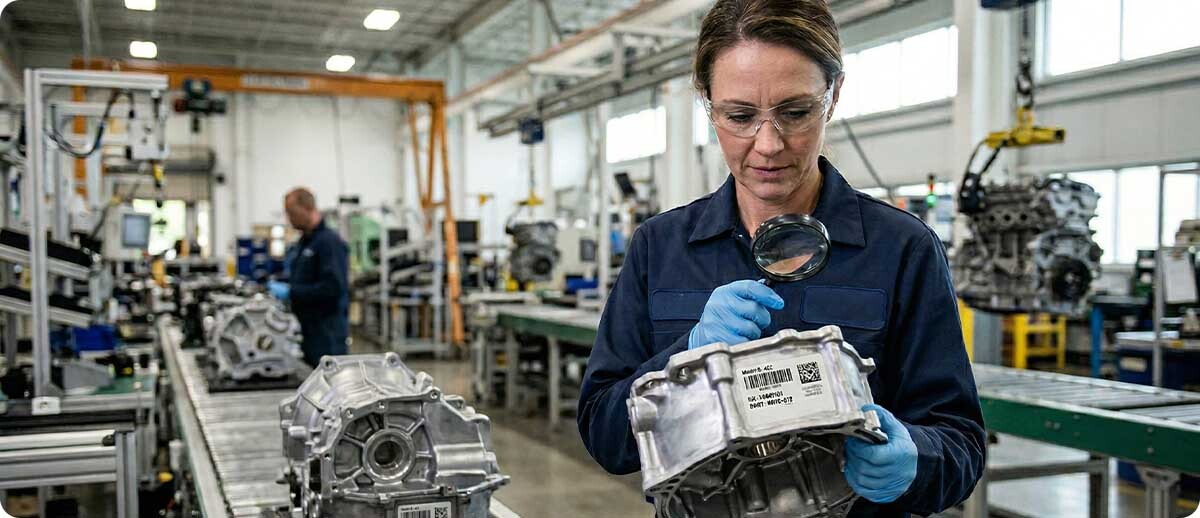
If you're currently producing labels for UL Listed or Recognized products and aren't certain whether your label-ribbon combination constitutes a recognized system, here is how to check:
1. Check the label product data sheet. Every UL recognized label material published a data sheet that specifies the recognized ribbon series. For Brady, look for the UL file number (MH17154 is Brady's primary file) and the specific ribbon series listed. For Zebra, the data sheet specifies "compatible genuine Zebra resin ribbons."
2. Verify via UL Product iQ. UL's public database at iq.ul.com allows you to search by company name and certification category. Brady's PGJI2 listings will show the specific label-ribbon combinations evaluated. This is the authoritative source — not the product data sheet, not a distributor's product description.
3. Check the ribbon you're currently running. Pull the ribbon data sheet and verify: does it explicitly list compatibility and UL recognition with the specific label material you're using? "UL recognized" on the ribbon alone is not sufficient — the combination must be recognized.
4. Document the system in your quality records. Automotive suppliers subject to IATF 16949 or customer-specific quality requirements should document the UL recognized label-ribbon combination as part of their production control plan. Part number, supplier, UL file reference. If the ribbon is substituted, that substitution should trigger a review of whether the certified system is maintained — not a purchasing decision made in isolation.
Frequently Asked Questions: UL 969 System Compliance
Our ribbon supplier is out of stock on the R6000. Can we temporarily use another resin ribbon?
Not without breaking the certified system. Even a "temporary" substitution produces labels that cannot be traced to the UL recognized combination — and those labels are on products that may be in the field for 15 years. The correct response to an R6000 shortage is to contact Thermal Printer Supplies for availability and lead time before running an uncertified ribbon. We stock the R6000 in multiple widths and lengths for exactly this reason.
Can we use Zebra resin ribbon on Brady B-422 labels running on a Zebra printer?
The Brady B-422 recognition specifies Brady R6000 ribbon — not generic resin ribbon and not Zebra resin ribbon. Running Brady labels with Zebra ribbon on a Zebra printer produces output outside the certified system, regardless of ribbon type or print quality. If your operation runs Zebra printers and requires UL certified output, the recommended path is Zebra Z-Ultimate 2000T labels with Zebra 5095 resin ribbon — both of which are in stock at TPS and form a complete Zebra recognized system.
Does the printer itself need to be UL recognized?
No. UL 969 PGJI2 certification covers the label material and printing ink combination — the output system. The printer is not part of the UL recognition. What matters is that the printer produces output consistent with the print settings the system was evaluated at. Running a certified label-ribbon combination on any thermal transfer printer at appropriate darkness and speed settings produces certified output.
Does this apply to direct thermal labels as well?
Direct thermal labels don't use a ribbon — the thermally reactive coating on the label itself is the imaging layer. UL 969 recognition for direct thermal label stocks covers the facestock and its built-in imaging chemistry as a system without a separate ribbon component. For automotive applications, direct thermal is rarely appropriate because the thermally reactive coating is vulnerable to heat, UV, and chemical exposure — conditions that are routine in automotive environments. Thermal transfer with a resin ribbon on a polyester facestock is the correct technology for virtually all under-hood, harness, and component labeling.
We source labels and ribbon from different distributors. Does that affect the certification?
No — UL certification is on the product, not the distributor. As long as the label material is genuine Brady B-422 (or another recognized material) and the ribbon is genuine Brady R6000 series, the certified system is intact regardless of which distributor sold each component. What matters is that both products are genuine — alternative or third-party products claiming to be "compatible with" or "equivalent to" certified materials are not themselves certified, even if labeled as such.