
The Top 5 Industrial Barcode Printers 2026 Review
Posted by Thermal Printer Supplies on Dec 15th 2025
The industrial thermal printing landscape, which includes the robust tabletop models (defined by their acceptance of a 3-inch media core), has matured. As we roll into 2026, the market is characterized by a handful of real contenders, largely due to a trend of industry consolidation over the past decade. Major players have acquired smaller competitors, leading to fewer thermal printer manufacturers truly investing in the technology.
This minimal R&D investment is somewhat fitting because, in many ways, thermal printer technology has reached an asymptotic limit. The core mechanism—transferring heat to create an image—is fundamentally sound. Game-changing advancements are hard to come by. While every manufacturer chases incremental gains, such as increased print speed without sacrificing accuracy, better on-board code verification, or a longer-lasting printhead heating element, the workhorses of the industry mostly focus on rock-solid reliability, deeper enterprise integration, and lower Total Cost of Ownership (TCO).
For companies relying on high-volume, mission-critical labeling, investing in the best-in-class industrial tabletop printer remains crucial. Here is the definitive list of the top 5 tabletop barcode printers for 2026, ranked in order of market importance and overall value proposition.
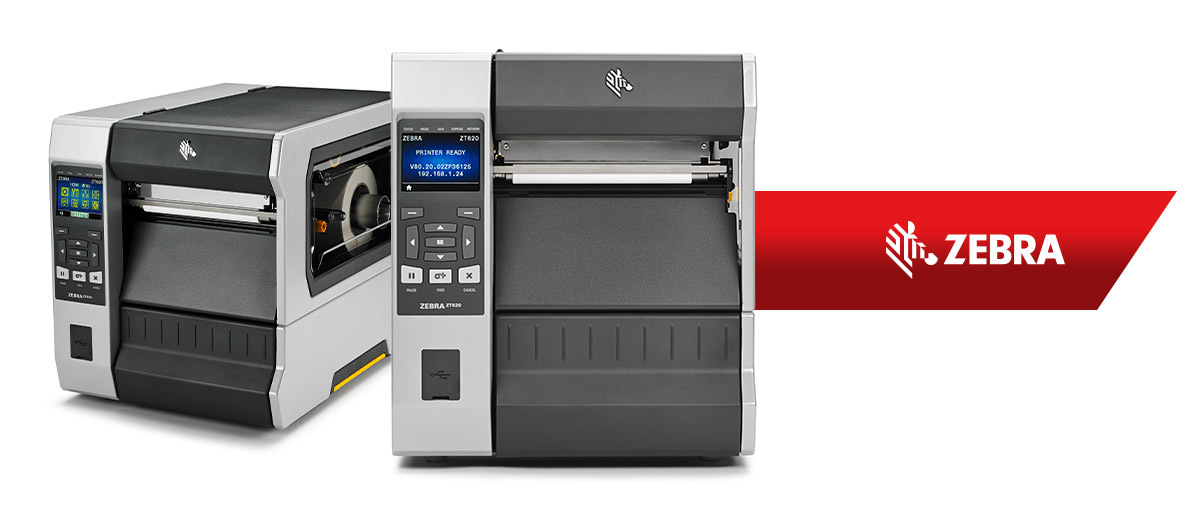
1. Zebra ZT610 / ZT620 Series: The Industry Standard
The Zebra ZT610 (4-inch) and ZT620 (6-inch) printers are the undisputed market leaders, inheriting the rugged, reliable legacy of the former Xi Series. These printers are the benchmark against which all other industrial models are measured. Their overall positioning is simple: they are the premium workhorse for high-volume, 24/7/365 operations in the harshest industrial environments. They are the go-to choice for global enterprises that prioritize maximum uptime and seamless integration into existing Zebra ecosystems.
Standout Features:
- Rugged Construction: Featuring a durable, all-metal frame and bi-fold door, they are built for extreme industrial conditions.
- High-Resolution Options: The ZT610 offers a high-precision 600 dpi option for printing extremely small labels or complex 2D codes (like DataMatrix) where high density is required.
- Future-Ready Adaptability: They include two open communication slots and field-installable options for RFID encoding and various media handling, ensuring a long asset life.
- Print DNA Software: Zebra's suite of software tools (Print DNA) provides powerful remote management, security, and integration capabilities that are essential for large, dispersed printer fleets.
TCO & Reliability:
While the street price for a ZT610 is often higher than its competitors, its TCO is offset by phenomenal long-term reliability and market-leading downstream support through the extensive Zebra OneCare service plans and global partner network. This comprehensive support, which often includes printhead replacement and protection against accidental damage, significantly minimizes unexpected maintenance costs and maximizes uptime—the most critical TCO factor in a high-volume environment.
Bottom Line:
The Zebra ZT610/ZT620 is best-in-class because it sets the standard for industrial durability, high-resolution precision, and enterprise-level fleet management. When failure is not an option, the ZT600 Series is the proven solution.
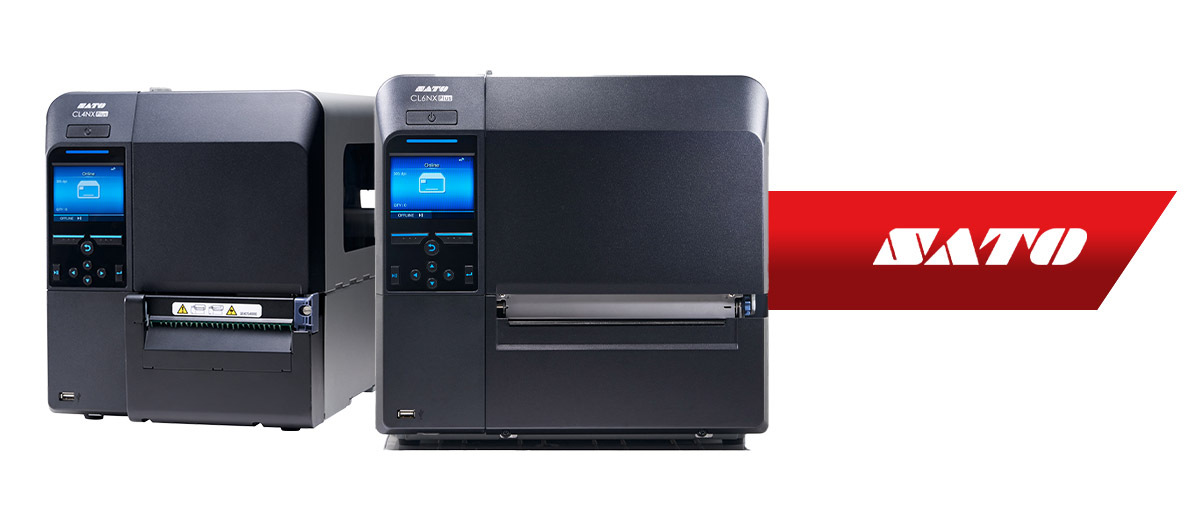
2. SATO CL4NX Plus / CL6NX Plus Series: The User-Centric Challenger
SATO's CL4NX Plus (4-inch) and CL6NX Plus (6-inch) models represent the strongest challenge to Zebra's dominance. SATO has aggressively positioned the NX Plus series as a highly user-friendly and intelligent alternative, focusing heavily on operational simplicity and media economy. They are ideal for global manufacturing, logistics, and healthcare operations where multilingual support, ease-of-use, and quick maintenance are paramount.
Standout Features:
- Unmatched Print Head Opening: A 60° wide print head opening allows for unparalleled ease in loading media and cleaning, drastically reducing media jams and simplifying maintenance.
- Tool-Free Maintenance: Quick, tool-free replacement of the printhead and platen roller, coupled with a Pure Line visual wear indicator on the platen, minimizes operator downtime.
- AEP (Application Enabled Printing): This onboard intelligence allows the printer to run custom applications without a host computer, enabling standalone printing solutions that simplify workflows.
- Best-in-Class Media Capacity: They support a large media roll (up to 10 inches OD on the CL4NX Plus model and 8.66 inches on the CL6NX Plus), which, coupled with longer ribbons, translates to significantly less time spent changing supplies.
TCO & Reliability:
The SATO CL4NX Plus often has a highly competitive street price that is generally lower than the equivalent Zebra model. The improved media and ribbon capacity significantly reduce per-label costs and operational downtime, making its TCO exceptionally strong for high-volume users. SATO's global support network, while perhaps not as expansive as Zebra's in every region, is highly reliable and complemented by robust, optional SATO Select Enhanced Warranty programs.
Bottom Line:
The SATO CL4NX Plus / CL6NX Plus is best-in-class due to its focus on operator efficiency and consumables economy, offering world-class performance with an emphasis on a lower long-term cost of operations through reduced supply changeovers and simpler maintenance.
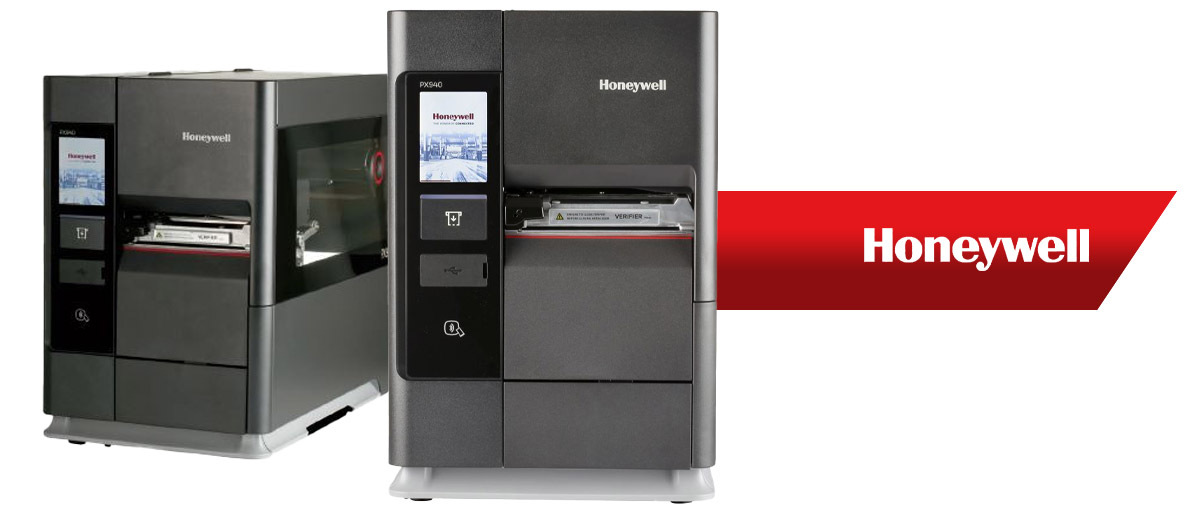
3. Honeywell PX940 Series (with Verifier): The Quality & Compliance Specialist
The Honeywell PX940 is in a category of its own when configured with its signature feature: the integrated label verification technology. This printer is not simply a high-volume workhorse; it is a specialized compliance tool. It is strategically positioned for industries where barcode readability is absolutely mission-critical and non-compliance fines are severe, such as pharmaceuticals, healthcare, automotive, and high-value logistics.
Standout Features:
- Integrated Barcode Verification: The game-changing feature. A sophisticated scanner is built into the print path, inspecting, grading (ANSI grade), and automatically voiding/reprinting any non-compliant label before it leaves the printer. This ensures 100% accurate, readable barcodes every time.
- Ultra-Precise Print Registration: Offers print registration accuracy of up to plus or minus 0.2 mm (plus or minus 0.0079"), critical for printing on small labels or for achieving precise, repeatable output.
- Smart Printing Capability: Allows for stand-alone configuration and printing without a host computer.
- Multi-Language Support: Its firmware supports multiple printer languages (ZPL, EPL, DPL), making it an easy drop-in replacement for competitive models.
TCO & Reliability:
While the street price for the verifier-equipped model is premium, its TCO calculation is unique. The cost is justified not by print volume alone, but by the elimination of costly fines, chargebacks, and returned shipments resulting from bad barcodes. For a regulated industry, this guaranteed compliance offers an ROI that dwarfs the printer's initial capital cost. Reliability is high, built on an all-metal mechanism, and supported by Honeywell's extensive service programs, including the popular Edge Gold Service.
Bottom Line:
The Honeywell PX940 (with Verifier) is best-in-class for its guaranteed 100% barcode readability, making it the indispensable tool for compliance-driven, high-value supply chains.
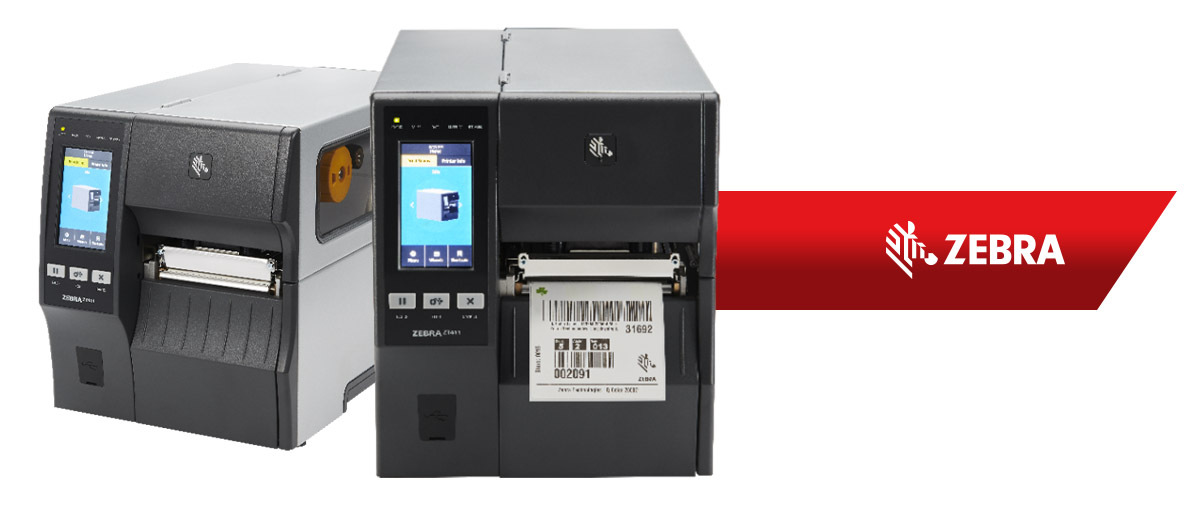
4. Zebra ZT411 / ZT421 Series: The Mid-Range Powerhouse
The Zebra ZT411 (4-inch) and ZT421 (6-inch) printers are the next step down from the ZT600 Series. They are positioned as the premium mid-range industrial printer, balancing ruggedness and speed with a more accessible price point. They are the ideal choice for companies with high-volume requirements that don't need the absolute 24/7 non-stop durability or the most advanced micro-label precision of the ZT600.
Standout Features:
- Versatile Media Handling: Excellent for a wide range of applications and media types, often including an optional cutter, peeler, and RFID capabilities.
- Color Touch Display: Equipped with a 4.3-inch color touch display, providing an intuitive, icon-based interface for fast setup and troubleshooting.
- Speed and Performance: Capable of fast print speeds (up to 14 ips on the ZT411 and 12 ips on the ZT421) and includes a robust processor and memory to handle complex label formats without bottlenecking.
- Bi-fold Media Door: Saves space in tight industrial environments where a full swing door might be impractical.
TCO & Reliability:
The ZT411/ZT421 has a compelling street price that positions it as a great value for its performance class. With a metal frame and enclosures, its reliability is excellent for multi-shift, high-volume use. Its inclusion in the Zebra Print DNA ecosystem and eligibility for Zebra OneCare ensures consistent performance and quality support, contributing to a lower TCO compared to lesser-known brands that may require more frequent, costly servicing.
Bottom Line:
The Zebra ZT411/ZT421 is best-in-class because it delivers top-tier industrial performance, speed, and enterprise management capabilities at the most competitive price point within the Zebra ecosystem.
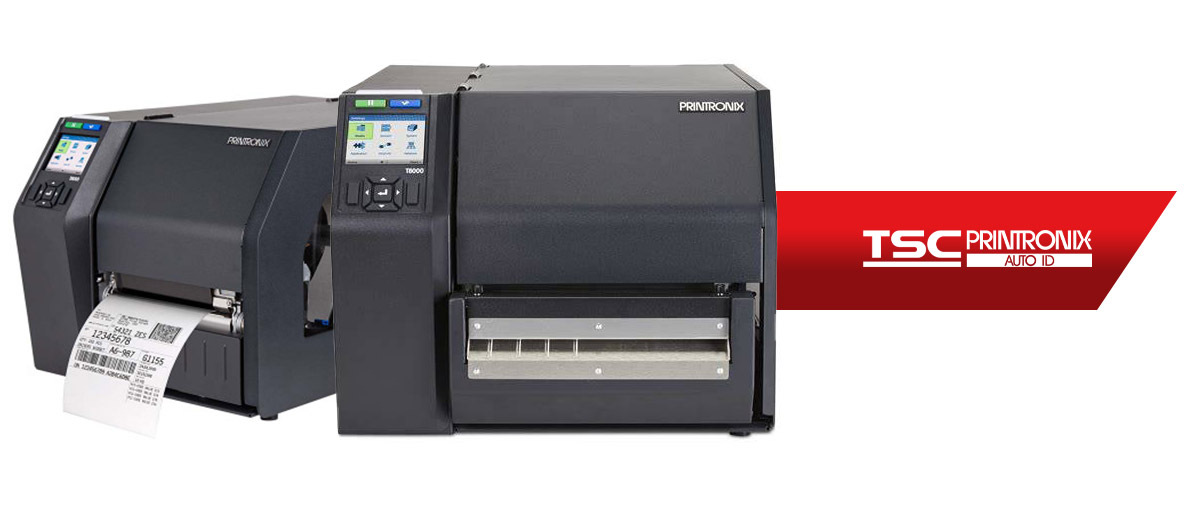
5. TSC Printronix T8000 Series: The High-End Alternative
The TSC Printronix T8000 series is positioned as the high-end industrial offering from the TSC Printronix Auto ID merger, bringing together rugged design and powerful performance. It is a strong competitor to both the Zebra ZT600 and SATO CL4NX, often appealing to users looking for a reliable, feature-rich alternative with a legacy of robust construction.
Standout Features:
- PostScript/PDF Printing: The T8000 offers one of the most extensive libraries of print emulations in the industry, including support for direct PDF printing, which is highly valued for specific enterprise-level applications.
- Optional ODV-2D: Similar to the Honeywell PX940, the T8000 can be configured with the optional Online Data Validation (ODV-2D) system to automatically read, grade, and strike-over bad 1D and 2D barcodes.
- Enterprise Management: Seamless integration with PrintNet Enterprise for remote management and SOTI Connect.
- Rugged Design and Speed: Built with a die-cast aluminum frame, it can withstand harsh environments and provides impressive print speeds.
TCO & Reliability:
The street price of the T8000 is competitive with other top-tier industrial models, particularly when considering the high-end features like ODV-2D. Printronix has a long-standing reputation for building tanks—reliable, rugged printers that hold up under continuous use. The merger with TSC has bolstered its global support infrastructure, providing a stable platform for long-term support and part availability, which is key to maintaining a favorable TCO over its operational life.
Bottom Line:
The TSC Printronix T8000 is best-in-class as the most robust, feature-flexible high-end alternative on the market, offering specialized features like direct PDF printing and integrated verification to meet niche, high-demand enterprise needs.
Top 5 Questions to Ask Before Selecting a New Tabletop Barcode Printer
Selecting a new tabletop barcode printer is more than just comparing spec sheets; it’s an investment in a mission-critical process. The right choice requires a deep understanding of your operational context, not just the printer's maximum performance metrics.
Here are the top 5 questions an end-user must ask when considering a new tabletop printer model:
1. What is the Sustained Daily Print Volume, and what are the Peak Cycle Requirements?
- A printer's maximum print speed (e.g., 14 ips) is often misleading. The key is the printer's duty cycle: how many labels it is reliably designed to print per shift or per day, continuously. A true industrial printer (like the ZT610 or CL4NX Plus) is designed for non-stop, 24/7/365 thermal transfer printing. A "mid-range" model may save on initial cost but will wear out faster or require more frequent maintenance in a non-stop operation, leading to a higher TCO and unacceptable downtime.
2. Is Barcode Verification/Validation a Compliance or Quality Requirement?- For industries like pharmaceutical, automotive, or high-value retail, a bad barcode can result in a shipment rejection or a hefty compliance fine. If your process requires zero-defect labeling, then integrated verification (like the Honeywell PX940 or TSC Printronix ODV-2D) is no longer an optional accessory—it’s a mandatory feature that offers a rapid ROI by eliminating chargebacks. You must determine the ANSI grade required for your barcodes.
3. How will the Printer be Integrated and Managed Across the Enterprise?
-The days of standalone printers are gone. Modern operations require centralized fleet management. Do you need a printer that integrates easily with proprietary software suites (like Zebra's Print DNA) for remote configuration, firmware updates, and troubleshooting? If you operate a fleet of 50+ printers, the time saved by remote management drastically lowers operational overhead and is a massive TCO driver.
4. What are the Environmental Conditions, and How Durable does the Print Image Need to Be?
- The printer's enclosure and print method must match the environment. Is the location dusty, humid, subject to extreme temperatures, or exposed to chemicals? If so, an all-metal industrial chassis is essential. Furthermore, if the label must survive for years, outdoors, or on parts exposed to solvents, Thermal Transfer (using a ribbon) is mandatory. If the label is for a quick shipping manifest or a short-term tracking tag, Direct Thermal is sufficient.
5. What is the Total Cost of Ownership (TCO) for Consumables, Printheads, and Service?
-The street price is just the entry ticket. The real cost comes from consumables and service. Crucial TCO factors are:
- Printhead Life: What is the manufacturer's warranty/expected life, and what is the cost of a replacement?
- Media Capacity: Printers with larger label rolls and longer ribbons (like the SATO CL4NX Plus) have fewer operator changeovers, improving efficiency.
- Service Contract: What is the cost of a comprehensive, multi-year service plan (like Zebra OneCare) that covers wear-and-tear and printhead replacement? This is the most effective insurance against unpredictable downtime costs.
Talk to an Expert