
Color on Demand: Why Inkjet is Killing Pre-Printed Label Stock
Posted by Thermal Printer Supplies on Jan 27th 2026

Color on Demand: How Inkjet Color Labeling is Replacing Pre-Printed Thermal Stock
For decades, the standard operating procedure for industrial labeling was a two-step dance that most warehouse managers grew to loathe. First, you ordered thousands of "pre-printed" shells—label rolls with your colorful logo, a red GHS diamond, or a brand border already applied by an outside print house. Then, you loaded those shells into a thermal transfer printer to overprint the black text, barcodes, and specific product data.
It was a system built on the necessity of the time, but in 2026, the cracks in this "pre-print" model have become impossible to ignore. Between the rising costs of warehouse space and the volatile nature of global compliance regulations, the "headache" of stockpiling pre-printed stock has evolved into a full-blown operational migraine. The solution isn't just a better thermal printer; it is the wholesale shift to on-demand inkjet color labeling.
The Invisible Costs of the Pre-Print Headache
The most obvious problem with pre-printed custom labels is the inventory. To get a decent price from a label converter, companies often have to order 10,000 or 50,000 units at a time. This creates a "stockpile trap." You aren't just storing labels; you are storing potential waste.
If a regulatory body like OSHA updates a GHS (Globally Harmonized System) requirement, or if your marketing team decides to refresh the brand logo, those 40,000 remaining labels in your warehouse instantly become expensive landfill fodder. Furthermore, managing hundreds of different SKUs of pre-printed rolls is a logistical nightmare. A worker grabs the "red border" roll when they needed the "orange border" roll, and suddenly an entire production run is mislabeled, leading to costly recalls or shipping delays.
This is where the flexibility of on-demand printing changes the game. By moving to a blank-roll-in, finished-label-out workflow, you eliminate the need to manage a library of pre-printed stock. You stock one thing: blank media.

The One-Pass Revolution: GHS and Branding in Real-Time
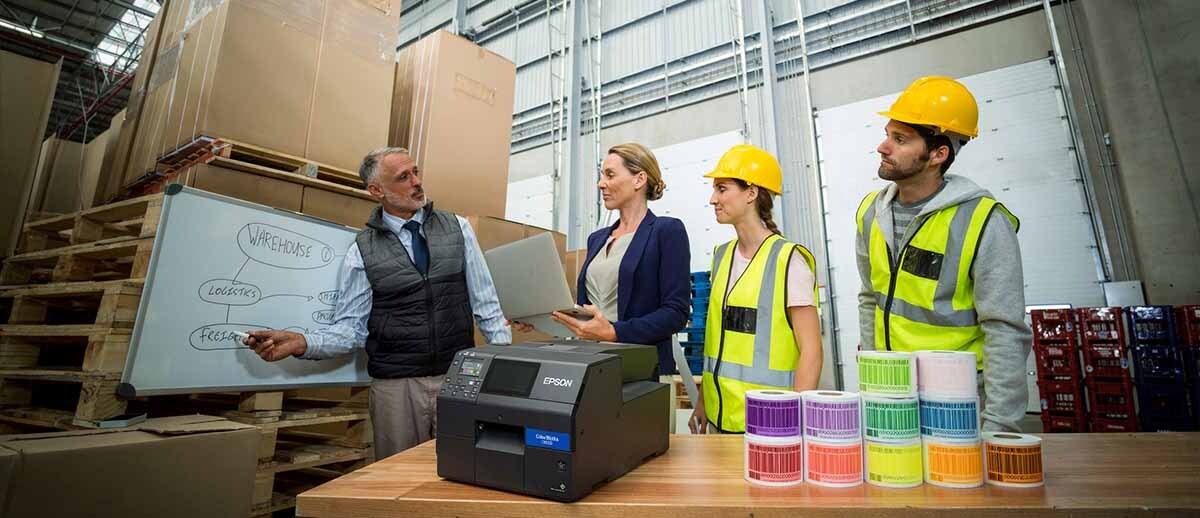
The real magic happens when you look at high-performance inkjet systems like the Epson ColorWorks series or Brother’s latest industrial color offerings. These aren't the desktop inkjets from a home office; they are rugged, high-speed machines designed to handle the "one-pass" workflow.
In a traditional thermal setup, printing a GHS-compliant chemical label is a multi-stage process. You need the red diamonds pre-printed, but because GHS requires specific pictograms for different chemicals (flammability, toxicity, environmental hazard), you end up needing different pre-printed rolls for every single chemical variation.
With an inkjet system, the printer receives the raw data and prints the entire label—vibrant red GHS pictograms, high-resolution brand logos, and sharp black barcodes—in a single pass on plain white synthetic or paper stock.
- Why this matters for GHS Compliance: Under GHS regulations, you cannot have blank red diamonds on a label. If your pre-printed stock has four diamonds but your chemical only requires two, you have to find a way to "black out" the unused ones. Inkjet solves this by only printing the exact pictograms needed for that specific batch, ensuring 100% compliance without the manual workarounds.
Durability That Defies the "Inkjet" Stereotype
A common misconception is that inkjet labels are "fragile" or prone to smearing if they get wet. While that might be true for a standard document printer, industrial color labelers use pigment-based inks and specially coated media that are engineered for the harshest environments.
Printers like the Epson ColorWorks C6000 or C7500 use DURABrite pigment ink, which is BS5609 certified. This means the labels can literally be submerged in seawater for months or exposed to high UV rays without the text fading or the ink running. When paired with the right synthetic stock, these labels are often more durable than the thermal transfer labels they replace, which can sometimes "ghost" or smudge under high heat.
Total Cost of Ownership: Beyond the Ink Cartridge
When people compare thermal to inkjet, they often look only at the cost of the ink versus the cost of a thermal ribbon. This is a narrow view that ignores the "Total Cost of Ownership" (TCO).
To calculate the true savings of on-demand color, you have to factor in:
- The Cost of Obsolescence: How many pre-printed labels do you throw away every year due to design changes?
- Labor Savings: How much time do your workers spend swapping out rolls every time a new SKU comes down the line?
- Storage Value: What is the "rent" on the warehouse space currently occupied by 500 different boxes of pre-printed labels?
- The Ribbon Waste: Thermal transfer printing requires a ribbon that is used 1:1 with the label length, even if you only print one line of text. Inkjet only uses the microscopic droplets required for the design.
In many industrial settings, switching to an on-demand color inkjet system reduces the total labeling spend by 30% to 50% within the first two years, purely by eliminating waste and streamlining labor.
Agility as a Competitive Advantage
In the 2026 market, agility is the ultimate currency. E-commerce and "just-in-time" manufacturing demand that businesses react to orders in hours, not weeks. If you have to wait 14 days for a print house to ship you a new batch of color-bordered labels, you’ve already lost the contract.
With an on-demand system, a new product can be conceptualized in the morning and be sitting on a shipping pallet with a professional, full-color branded label by the afternoon. You can run seasonal promotions, add QR codes for digital tracking, or include personalized "thank you" messages on shipping labels without ever changing your hardware or ordering new stock.
The era of the "pre-print headache" is coming to a close. As the technology behind the Epson ColorWorks and Brother industrial lines continues to advance, the argument for keeping thousands of pre-printed shells in a warehouse becomes weaker every day. By adopting a "Color on Demand" strategy, manufacturers and distributors aren't just buying a printer—they are buying the freedom to change, the ability to comply, and a significant reduction in environmental and financial waste.