
The Top 5 Industrial Barcode Printers 2026 Review
Posted by Thermal Printer Supplies on Dec 15th 2025
The industrial thermal printing landscape, which includes the robust tabletop models (defined by their acceptance of a 3-inch media core), has matured. As we roll into 2026, the market is characterized by a handful of real contenders, largely due to a trend of industry consolidation over the past decade. Major players have acquired smaller competitors, leading to fewer thermal printer manufacturers truly investing in the technology.
This minimal R&D investment is somewhat fitting because, in many ways, thermal printer technology has reached an asymptotic limit. The core mechanism—transferring heat to create an image—is fundamentally sound. Game-changing advancements are hard to come by. While every manufacturer chases incremental gains, such as increased print speed without sacrificing accuracy, better on-board code verification, or a longer-lasting printhead heating element, the workhorses of the industry mostly focus on rock-solid reliability, deeper enterprise integration, and lower Total Cost of Ownership (TCO).
For companies relying on high-volume, mission-critical labeling, investing in the best-in-class industrial tabletop printer remains crucial. Here is the definitive list of the top 5 tabletop barcode printers for 2026, ranked in order of market importance and overall value proposition.
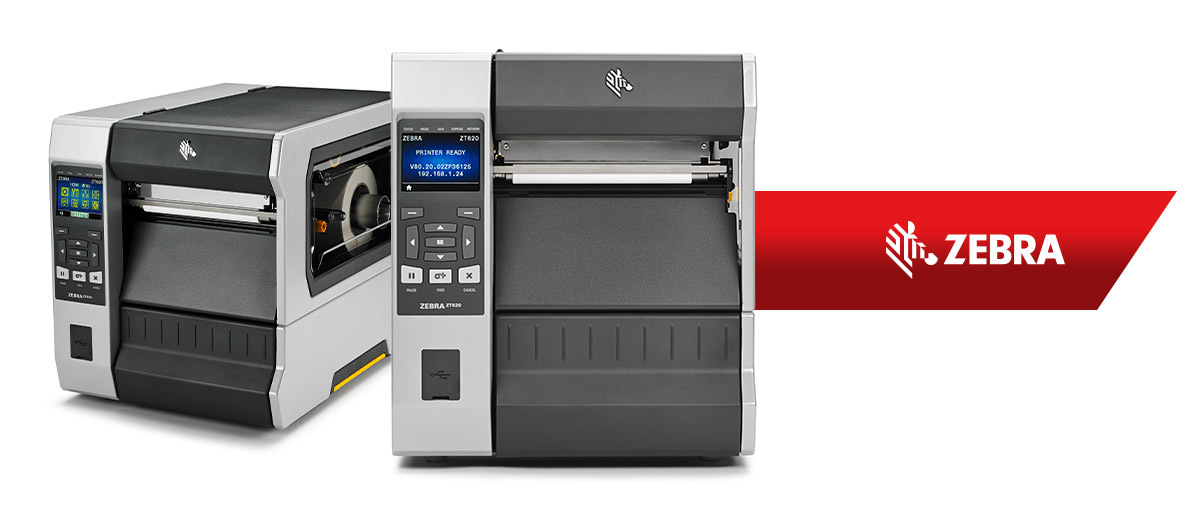
1. Zebra ZT610 / ZT620 Series: The Industry Standard
The Zebra ZT610 (4-inch) and ZT620 (6-inch) printers are the undisputed market leaders, inheriting the rugged, reliable legacy of the former Xi Series. These printers are the benchmark against which all other industrial models are measured. Their overall positioning is simple: they are the premium workhorse for high-volume, 24/7/365 operations in the harshest industrial environments. They are the go-to choice for global enterprises that prioritize maximum uptime and seamless integration into existing Zebra ecosystems.
Standout Features:
- Rugged Construction: Featuring a durable, all-metal frame and bi-fold door, they are built for extreme industrial conditions.
- High-Resolution Options: The ZT610 offers a high-precision 600 dpi option for printing extremely small labels or complex 2D codes (like DataMatrix) where high density is required.
- Future-Ready Adaptability: They include two open communication slots and field-installable options for RFID encoding and various media handling, ensuring a long asset life.
- Print DNA Software: Zebra's suite of software tools (Print DNA) provides powerful remote management, security, and integration capabilities that are essential for large, dispersed printer fleets.
TCO & Reliability:
While the street price for a ZT610 is often higher than its competitors, its TCO is offset by phenomenal long-term reliability and market-leading downstream support through the extensive Zebra OneCare service plans and global partner network. This comprehensive support, which often includes printhead replacement and protection against accidental damage, significantly minimizes unexpected maintenance costs and maximizes uptime—the most critical TCO factor in a high-volume environment.
Bottom Line:
The Zebra ZT610/ZT620 is best-in-class because it sets the standard for industrial durability, high-resolution precision, and enterprise-level fleet management. When failure is not an option, the ZT600 Series is the proven solution.
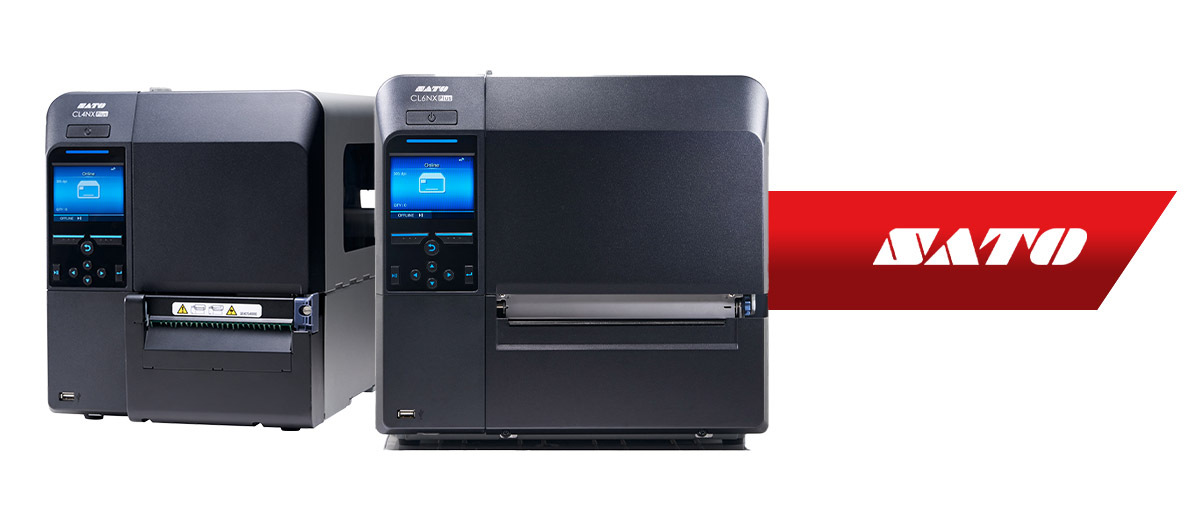
2. SATO CL4NX Plus / CL6NX Plus Series: The User-Centric Challenger
SATO's CL4NX Plus (4-inch) and CL6NX Plus (6-inch) models represent the strongest challenge to Zebra's dominance. SATO has aggressively positioned the NX Plus series as a highly user-friendly and intelligent alternative, focusing heavily on operational simplicity and media economy. They are ideal for global manufacturing, logistics, and healthcare operations where multilingual support, ease-of-use, and quick maintenance are paramount.
Standout Features:
- Unmatched Print Head Opening: A 60° wide print head opening allows for unparalleled ease in loading media and cleaning, drastically reducing media jams and simplifying maintenance.
- Tool-Free Maintenance: Quick, tool-free replacement of the printhead and platen roller, coupled with a Pure Line visual wear indicator on the platen, minimizes operator downtime.
- AEP (Application Enabled Printing): This onboard intelligence allows the printer to run custom applications without a host computer, enabling standalone printing solutions that simplify workflows.
- Best-in-Class Media Capacity: They support a large media roll (up to 10 inches OD on the CL4NX Plus model and 8.66 inches on the CL6NX Plus), which, coupled with longer ribbons, translates to significantly less time spent changing supplies.
TCO & Reliability:
The SATO CL4NX Plus often has a highly competitive street price that is generally lower than the equivalent Zebra model. The improved media and ribbon capacity significantly reduce per-label costs and operational downtime, making its TCO exceptionally strong for high-volume users. SATO's global support network, while perhaps not as expansive as Zebra's in every region, is highly reliable and complemented by robust, optional SATO Select Enhanced Warranty programs.
Bottom Line:
The SATO CL4NX Plus / CL6NX Plus is best-in-class due to its focus on operator efficiency and consumables economy, offering world-class performance with an emphasis on a lower long-term cost of operations through reduced supply changeovers and simpler maintenance.
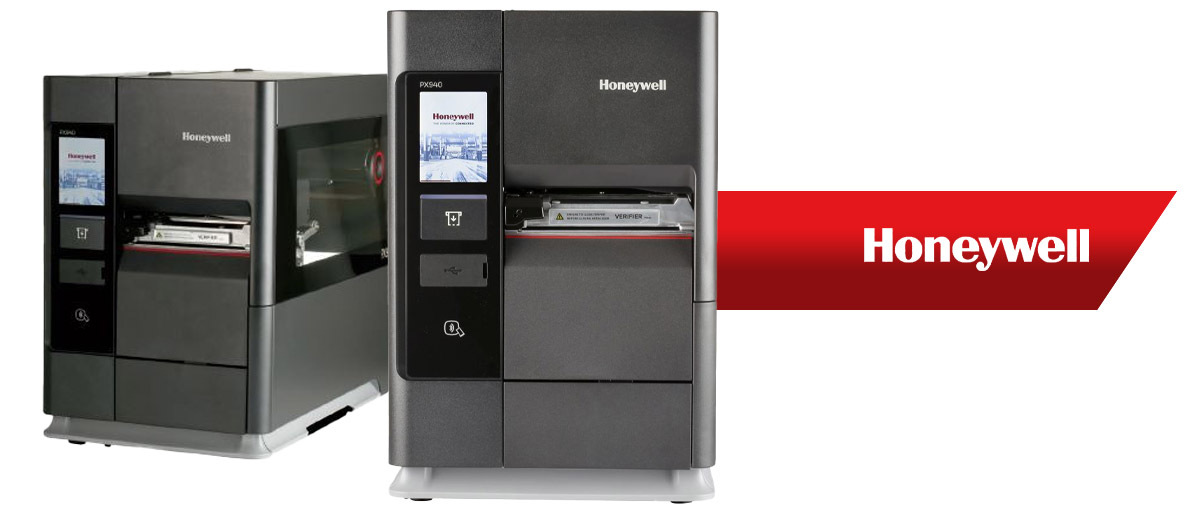
3. Honeywell PX940 Series (with Verifier): The Quality & Compliance Specialist
The Honeywell PX940 is in a category of its own when configured with its signature feature: the integrated label verification technology. This printer is not simply a high-volume workhorse; it is a specialized compliance tool. It is strategically positioned for industries where barcode readability is absolutely mission-critical and non-compliance fines are severe, such as pharmaceuticals, healthcare, automotive, and high-value logistics.
Standout Features:
- Integrated Barcode Verification: The game-changing feature. A sophisticated scanner is built into the print path, inspecting, gradi